
-

-
As a business owner, you know what it’s like to lie awake at 2 a.m. Maybe it has happened when you are excited and full of new ideas for your business. More often, it’s because you are worried about issues you will face the next day. Sometimes, it’s because you just woke up with the solution to a problem. I’ve experienced all those emotions about my businesses over the years. Awake at 2 o’clock? is where I share them with you, and hopefully help with answers that will let you sleep.
 John F. Dini, CExP, CEPA



-
Small business owners are the Hunters of the 21st century. We are 3% of the US population, and yet we create over half of all American jobs. As Hunters, we may not be inclined to manage by the numbers or stick to systems. Are you a Hunter or a Farmer?

-
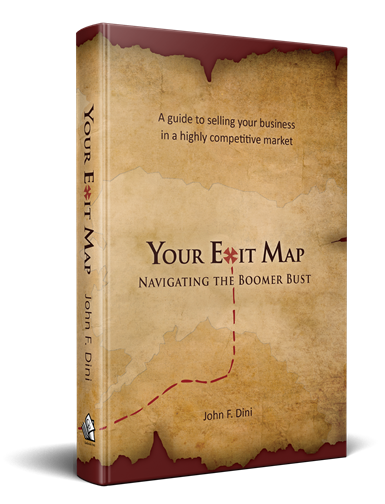
-
How prepared are you to exit your company?
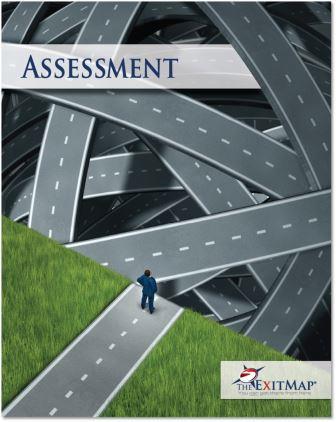
The Assessment breaks down the four major categories of exit readiness; Finance, Planning, Operations and Revenue/Profit.
Tag Archives: small business
Leave a Reply
2 Responses to Exiting a Family Business: Three Questions
Leave a Reply
The Unsellable Company
What does an unsellable company look like? Some business brokers will assert that there is a buyer for any business. That may be true, but historically four out of every five small businesses listed for sale fail to sell. In … Continue reading
Leave a Reply
Business isn’t Zero Sum
In any negotiation, you can assume a win-win solution or a zero sum outcome. “Win-win” is defined as when both parties come out ahead or achieve what they seek. “Zero sum” is when the premise behind negotiation is that whatever one … Continue reading
One Response to Business isn’t Zero Sum
-
Very good points. Unfortunately we have become very short term and self centered thinkers. Those with the greatest economic or political power will do what is necessary to gain and retain their control. This creates sub-optimal binary states that we fluctuate between rather than making long term gains for all.
Leave a Reply
Stop Managing
Why would anyone advise business owners to stop managing? Management is a proven science. From the time and motion studies of Frederick Winslow Taylor in the late 1800s, to Matthew Kelly and Patrick Lencione’s Dream Manager, we are constantly in … Continue reading
One Response to Stop Managing
-
Great summary of the panel session. I was in the audience for the panel and it was clear that business owners need to be more willing to let go and delegate more to a qualified 2nd in command. Like, John, I would encourage owners to consider upscaling their next hire into a more qualified candidate who can assume a strategic competency as a GM, Operations Manager, or even 2nd in-training. This is a high leverage investment which will allow more time for “working on the business.” TAB Business Coach-
I have read these columns for years. Enough with the exit planning already. Most of us are out here trying to succeed, not leave,
Thanks David. I know you’ve been a loyal reader for years, and I appreciate your comments. They’ve always been well-considered and erudite, if not necessarily in agreement with mine!
I guess you missed my post on February 12th. I read somewhere that “A particular strength is using a variety of technologies to bring separate systems together into a coherent solution.” In my case, I was fielding requests for articles and speaking on multiple topics, blogging on a variety of subjects, developing planning tools for advisors and consulting on ownership transitions. Too much work for diffused results. It was time to get focused.
I’d hate to lose you, but exit planning is what it’s gonna be…