
-

As a business owner, you know what it’s like to lie awake at 2 a.m. Maybe it has happened when you are excited and full of new ideas for your business. More often, it’s because you are worried about issues you will face the next day. Sometimes, it’s because you just woke up with the solution to a problem. I’ve experienced all those emotions about my businesses over the years. Awake at 2 o’clock? is where I share them with you, and hopefully help with answers that will let you sleep.
 John F. Dini


-
Your business is your life’s work. What comes next?
Your Exit Map: Navigating the Boomer Bust, combines humor and real owner stories, to help you understand your exit options, protect what you’ve built, and plan your next chapter.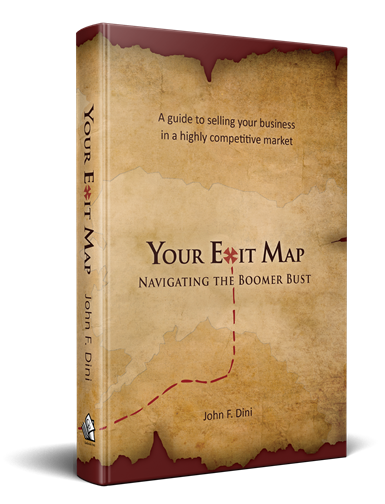

How prepared are you to exit your company?

The Assessment breaks down the four major categories of exit readiness; Finance, Planning, Operations and Revenue/Profit.
Category Archives: Entrepreneurship
Avoiding the 75%: Why So Many Owners Regret Selling Their Business
If you’re planning to sell your business someday, here’s a statistic worth sitting with: research from the Exit Planning Institute and PwC found that 75% of business owners feel “unhappy” or “profoundly unhappy” one year after exiting their company. Three … Continue reading
What’s Your Business Really Worth? (Probably Not What You Think)
If someone asked you right now what your business is worth, you’d probably answer fast, and with total confidence. That number’s likely made its way into conversations with your banker, onto a personal financial statement, maybe even into a retirement … Continue reading
Exit Planning: If Not Now, When?
You’ve probably said it yourself: “Talk to me in five years.” It’s the most common response advisors hear — and it makes sense. You’re heads-down building, not winding down. Exit planning feels like a conversation for later. The business is … Continue reading