
I’m sure you would all be disappointed if I didn’t return with some sort of business allegory related to my absence. Of course, I hate to disappoint…
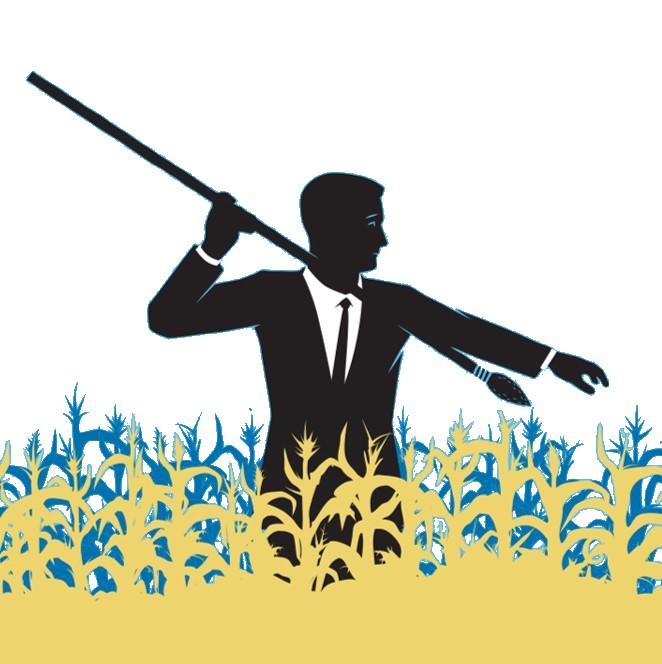
My book Hunting in a Farmer’s World focuses on the challenges of being a “Hunter” personality in a business environment that promotes focus on the “Farmer” tasks of management and process. When I present on Hunting and Farming around the country, however, I take a broader approach, not only recognizing the Hunters who are stifled by farming constraints, but also the Farmers who, regardless of the safety that lies in systems and processes, are called upon from time to time to make fast decisions, to go out on a limb, because people are depending on them and failure is not an option.
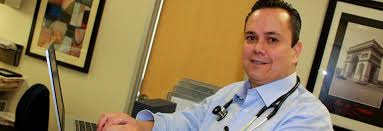 Timothy Hernandez MD, is an Internal Medicine Specialist, and my primary physician. I like having him as my “managing” health care professional. He is a Farmer; meticulous, systematic, and conservative. He pays attention to the details, and carefully tracks the smallest of changes from visit to visit.
On Tuesday, March 3rd, Dr. Hernandez worked me into his office schedule based on my wife’s description of my serious illness. I had been sick since Saturday, and the antibiotics prescribed by a weekend clinic were having no effect. In fact, I was growing noticeably worse.
Dr. Hernandez gave me a careful examination, showing surprising interest in what I thought were unimportant symptoms (earaches, eye sensitivity.) After some diagnostic manipulation, he called in his Nurse Practitioner. He repeated some of the manipulations, and had her do them as well. Although they agreed that my illness was serious, and probably required hospitalization, they couldn’t identify a primary diagnosis to justify an admission authorization.
Then Dr. Hernandez did something that, even in my deteriorating state, I recognized as dramatically out of character. Here’s a rough paraphrase of his directions to his Nurse Practitioner.
“I don’t think we have the time to go through an admission authorization process, so this is what we are going to do. I want you to listen carefully, because if anyone calls and I am unavailable for any reason, you are responsible for seeing the plan through.”
“You will put Mr. Dini in a wheel chair and walk him over to the hospital. When you get there, you will walk him through Emergency check-in without stopping, and tell them it is with my authorization and that we will do any paperwork later. By the time you get there I will have spoken to the physician in charge and told him what we need. You will get Mr. Dini into an ER room and get IVs started immediately.”
“Because he will be in the ER, Mr. Dini’s diagnostics can be all ordered stat. We will hold and treat him in the ER until a bed opens in the Intensive Care Unit and he can be moved there. Now go.”
In the next two hours my Septic Shock worsened dramatically, and I flirted with system failure for the next three days until my liver and kidney functions were stabilized enough to begin effective diagnostics. I spent 5 days in ICU and 5 more in telemetry before we got the upper hand, but without Dr. Hernandez’ decision to take immediate action, cut through the red tape, shortcut accepted process and recruit the cooperation of others, I would not be writing this. He is a Farmer, but his Hunter instincts and linear focus when failure wasn’t an option were exceptional.
There are clichés that we use and overuse in business. One we throw around when someone comes through with crucial information, or helps us achieve a goal, or makes us look good when we thought we wouldn’t. In all my career, however, I have never had the opportunity to use that cliché in its literal sense. I’m pleased and proud to be able to do so now.
Thanks Tim. You saved my life.






John,
I very happy to hear of your brilliantly orchestrated recovery.
Your remarks about the latent “hunter” in the many diligent, systems driven “farming” executives out there that consistently read your blog will be most welcome. Glad to have you back in the saddle.
John:
I am so glad that you defeated the illness. Having just gone through a scary episode myself I know the impact it can have in you and your family. My wishes for a complete recovery.
John,
I was alarmed to hear of your medical issue, and I’m so happy that you are on the road to recovery. As usual, you have nailed several essential truths about business and life – I don’t know where we’d all be without you.
Keep getting better!
Steve
John
Thank God for someone willing to go “outside of the box!”
Take care.
Carol
John,
I’m glad to hear you are on the road to recovery.. I think your story points out another aspect of being a hunter – even hunters need someone to watch out for them. Hunters can oftentimes have a “hero” mentality. I noticed that Leila was the one who made the call to the doctor to get you worked in…probably against your protests that it wasn’t necessary.
Good to see you back in the saddle.
Rusty…
Hey bud, only you..on your death bed…could come up with such a good story about your illness. Glad you are still with us, you had us worried.
Looking forward to our next Gerald-Rita.
Glad you have recovered John-you have a great doctor
John,
We are all blessed that you are still with us.
John, so glad you are on the road to recovery. Like you I had a similar episode in 2008. And like you, my wife (a true Farmer) made me go to the emergency room. Turned out, I had a staff infection. My body functions were beginning to break down (kidneys, liver). The Kidney specialist that saw me said I probably would have died that night had I not gone to the ER that morning. I’m so glad that Farmers sometime know what’s best, even though us Hunters sometimes think we can take on anything. Best of luck with the rest of your recovery.
Take care!
LA>
Happy to hear you are now doing well!