The Return of “Do It Yourself”

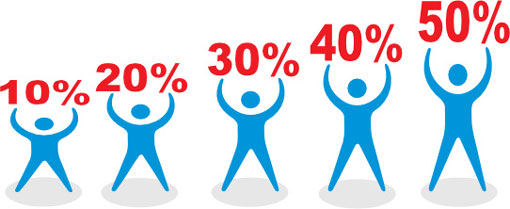
For the last 40 years, America has been on a roll. Baby Boomers, raised in a competitive environment, have increased the average work week, made the two income household ubiquitous, and currently operate about 60% of the small businesses in the USA.

Boomers are what they do, and are what they own. They judge their success by position and consumption. From the standpoint of Gross Domestic Product, they have been the most impactful generation in economic history. Their parents had work/life balance. There was work, and there was life. When work ended, you came home and had a life. Boomers blurred that line, making work and life all part of an ongoing daily cycle.

hard-workerThey have been a productivity machine, especially in small business. Generating income requires time, and time is a static commodity. Every week has the same number of hours, so the more time you spend on generating income, the less is left for other activities. Boomers dealt with this by subcontracting many of the activities outside of income production to others.

They invented competitive parenting, hiring others to help with homework and teach their kids how to throw a ball, or dance, or play piano. Health was outsourced, with fitness centers, personal trainers, vitamins and running shoes helping to maintain wellness in a strictly limited time frame, leaving more hours each week for income production.

The chores of maintaining the McMansion were subcontracted to an industry of local small business owners, especially franchisees. Housekeeping, landscaping, oil changes and home maintenance were dealt with through the yellow pages (and then the Internet.)

The service economy, where consumer spending is 75% of the GDP, has been touted as the model for the 21st century. That norm is a society where the majority of people make a living by performing tasks for other people who are too busy performing their own tasks.

Not all of this will change. We won’t go back to fixing our cars in the front yard (too complicated) or, as my Dad did, building an addition on our home on evenings and weekends. But the velocity of money, the wealth created by millions of really hard working folks paying other millions of really hard working folks to do things for them, may be coming to an end.

When I present to business owners about the issues of The Boomer Bust I ask the younger (under 40) owners whether they are willing to work in excess of 55 hours a week for the next 20 years in order to achieve material success. Few are, yet when I ask the Boomer owners whether they still work over 55 hours a week, virtually every hand is raised.

What would happen if every Boomer reduced his or her work week to 40 hours today? As  a coach to business owners, I encourage them to flip the control the business has over them, and take more time for themselves. Some do, some don’t, but even those who are successful at it seldom get to a mere 40 hours. They may work from home one day a week, or take more frequent vacations, but actually not working isn’t in most’s DNA.

The driven work ethic of the Boomers isn’t replicated in the succeeding generations. If we are honest, it wasn’t there in the preceding generations, either. The Boomers are an anomaly, entering the workforce in huge numbers, and creating opportunities for each other as a byproduct of those numbers. We will look back on the era of “Boomers serving Boomers” as a golden age for US consumption.

GenX and the Millennials may return to a simpler time, but they had better learn how to hammer a nail. We haven’t yet figured out an economic model that couples lower productivity with higher disposable income.


 

Picture Credit

Posted in Exit Planning | Tagged , , , , , | 6 Comments

6 Responses to The Return of “Do It Yourself”

  1. John, I appreciate your articles and I often agree with you on many of your assertions. On this topic though, I must introduce an alternative not in sync with yours. That is … when the egg’s not frying fast enough … often the solution is to turn up the heat.

    You are correct that time is a limited commodity. And you are also correct observing that many individuals identify their own success “by position and consumption.”

    But comparing the priorities of the sub-40 generations with those of the “boomers” today is not a reasonable comparison. The “right” comparison would be to compare the sub-40’s to the “boomers” when they were sub-40. Individuals younger than 40 will naturally have different priorities at this earlier stage of their life than a “boomer” does now. Who’s to say that at 45 to 55 those sub-40’s won’t decide to “turn up the heat?”

    I agree that there a differences in generations. But sometimes differences have more to do with stage of development than with the constraints imposed by the arbitrary age cut-offs required of generational labels. What may be more accurate is that, to some degree, we all define ourselves “by position and consumption,” and when one’s actual circumstance does not reconcile with one’s desired level of position or consumption, that dissonance can create a sense of urgency to move closer to accordance. In response to the dissonance, some will choose to “turn up the heat” while others will simply adjust their self-definition.

    I suspect that every generation will contain an ample cohort of individuals who will not be satisfied until there is a good fit between their own wants and needs, and their ability to satisfy those wants and needs. It may even be true that given the opportunity that the “boomer bust” creates, the “sub-40’s” will elect to “turn up the heat” a little earlier to seize the unique opportunity presented to them.

    Thanks again for your thought provoking articles John.

    Mike

  2. John:

    Good, thought-provoking article! Given the fact that Gen Xers and Millennials prefer to “work to live,” I wonder if another reason Boomer business owners continue to work long hours is because they feel there’s no one else who can manage their businesses as well as they do. Do you think the Boomers have done a good job finding and cultivating the right talent to take over for them one day?

    Rob K. – MillennialEdge360

  3. Pete Begin says:

    in your last paragraph you say that GenXers “better learn how to hammer a nail” as their reduced productivity will cause them reduced disposable income. That warning is looking at the world from a Boomer perspective. When i talk to my GenXer kids and their friends, they’re quite willing to live on reduced disposable income – they have no desire to “judge their success by position and consumption”. My (Boomer) initial reaction is to try to talk sense into them; but them i think about it more and say – maybe you’re right. Take that year sabbatical at age 28 and go to Spain with your girlfriend. The rat race will be here when you get back!

  4. Brad Elmhorst says:

    Thanks again John, spot on, thought provoking as usual. To Rob’s comment on cultivating the right talent, it is difficult to find the margins to hire two people for a job that used to take one passionate employee, the exception being a family owned business, where the children are vested at an early age and actively engage on their own.

  5. Kim Jackson says:

    While I’m no coach, so therefore, don’t have the broad background you have, my experience in working with Millennials is that they’ve learned lessons from their parents quite well, thank you very much.

    The small group of entrepreneurs I’m working with now are looking at leverage, from every angle. Several want the material trappings Boomers are noted for, yet I agree, they don’t want to work the long hours they saw (and many still do see) their folks put in every week.

    So they’re finding ways of creating passive revenue, at every turn. While they’re willing to put the time and energy in getting something off the ground, their overriding goal is to have others do the work, so they can do something else. (I’m assuming they’re starting other ventures for more passive revenue streams. But you know what they say about assume!)

    So what do they do? They follow in their parents’ footsteps: They outsource, both stateside and overseas. There are still plenty of other millennials who are willing to put in the long hours, and this group of millennials I’m working with are happy to leverage that.

    They’re also leveraging their outsourcing efforts, too. Because they’ve watched their Boomer parents’ loyalty get in their way of profitability and progress, they’re not overly tied to one vendor. So they find a few who will do the same tasks. If one rises to the top, they’ll outsource more to that individual or organization, but not all of it. From what I’m seeing, they’re not putting all their eggs in one basket.

    Yes, they’re more group-minded, but they’re also very bottom-line driven. And if something’s not working, they’re willing to pull the plug faster than their elders.

    Because not all millennials are like this group of people I’m working with, I think there’ll be plenty of folks who will still be willing to put in the long hours, just because they’re having so much fun doing it. As long as it’s fun, Millennials will play the game. Once it stops, it’s game over — and on to a new one.

    Most of my 20-year career as a custom publisher (magazines and newsletters, both electronic and printed) has been spent working with Boomers. As one myself, I understand them, their motivations and how to make them happy. Millennials have opened my eyes to doing business a different way. I find it refreshing to work with and learn from this group of business people.

    And if I can get out of my own way and take a page from the millennials’ book, I, too, may just find myself with a nice passive income stream. Until then, though, the 40+ hour work week beckons…

  6. Interesting and thought provoking article. I think that Baby Boomers are doing something very different than our parent’s generation. When my dad was my age his career was on a path that he stayed on until his retirement. My friends and I have cobbled out careers that have spiraled and shifted based on changes in the marketplace and changes in employer/employee relationships. Those of us no longer in the traditional workplace find ourselves at a new frontier and work relationships are like a circling of wagons to be better able to get to the new world. Though there is more DIY, there is also much more ad hoc team building driven by what works. I haven’t quite figured out how to not work long hours, though…

Leave a Reply

Your email address will not be published. Required fields are marked *

Can Small Business Survive Federal Regulation?

It has always been tough to start a business, but as Niall Ferguson points out in his excellent article “How America Lost Its Way” in the Wall Street Journal, it’s getting tougher. According to an annual survey by the World Bank, in only 20 countries has the red tape to start a business increased since 2006. The sixth-worst such case on earth? The United States, where the regulatory process is now calculated at 433 days. That puts us in competitive company like Zimbabwe, Burundi and Yemen.

It’s also tough to write a piece about business regulation without it sounding like a political rant. That’s not my intention. Laissez-faire economics has its drawbacks, and there are certainly issues of fair trade and public safety that fall to the Federal Government, which is tasked directly by the Constitution with regulating interstate trade.

There are two developments that came to my attention last week that scare me, however.

First, the Equal Employment Opportunity Commission (EEOC) has filed Federal lawsuits against BMW of North America and Dollar General Stores. The claim is that they unnecessarily check criminal records of those applying for employment. Unless they can prove that something about the job creates legitimate concern regarding prior criminal activity, this is illegal.

business criminalTheir argument rests not on the overall fairness to criminals however. Thankfully, they do not yet claim that criminals as a group should be a protected class. Instead, the suit points out that since African-Americans have proportionately higher conviction rate than other ethnicities, using criminal records as a hiring disqualifier is de facto racial discrimination.

Put aside for the moment the government’s implied position regarding racial bias in the justice system. That isn’t an employer’s fault, nor is it his responsibility. Discrimination is favorable treatment of one class of workers against another. Don’t law-abiding employees have the right not to work with criminals every day?

Federal law widely recognizes that those convicted of a crime lose certain rights. They are confined against their will. They have to report their whereabouts, at least while on probation. They can’t vote. They can’t buy guns. They carry a record for life. That is all part of the punishment for committing a crime. Reducing job opportunities isn’t discrimination against a race, it’s discrimination against criminals – which is pretty much the point of the whole system. Why should employers be denied the rights that the government gives to itself and everyone else? That sounds like discrimination to me.

The second regulatory issue isn’t new, but businesses are just becoming aware of it. Large sections of the Soviet-named “Affordable Healthcare Act” (no one on the planet claims it makes health care more affordable), are due for implementation on January 1, 2014. According to multiple industry and government surveys, thousand of service industry employers are preparing to reduce the hours of many employees below the 30 per week that triggers eligibility for coverage in preparation.

Now we are becoming aware of the “Retaliation clause” of the ACA. It confers “whistle-blower” status on  those who claim their hours were reduced to avoid paying for health care coverage. Such status gives the whistle-blower a substantial cut of any damages, lets the government pay the litigation costs, and can result in the tripling of any award for what will now be a criminal activity.

I realize that there is no regulation protecting the right of a business owner to make a profit. There is no law saying that shareholders can’t have their investments destroyed by regulatory confiscation (we’ll decide what you spend – you just pay it) in support of social policy. There is no statute that says, as Ayn Rand did, that the pursuit of financial success should be protected as long as it doesn’t harm anyone else.

But there should be.

On the bright side, at least those employers driven out of business by ACA convictions should be able to get a job…

Picture Credit

Posted in Entrepreneurship, Management | Tagged , , , , , | 2 Comments

2 Responses to Can Small Business Survive Federal Regulation?

  1. Jeff Ostroff says:

    Totally agree with the criminal background check. not just a right but practically a necessity. who would want to hire an embezzler to be your accountant, right? we get to check everything else on a resume’ or application, but not whether they broke the law? By the time an employer does the background check they have already passed the point of a judgement based on color, race, etc if in fact they were narrow minded enough to allow that to enter into their hiring decision.

    Disagree on healthcare. everyone deserves it and while the current law sucks it was the best our representatives could come up with considering their primary objective is always political, not about the people they represent. A lot of great ideas were shot down based solely on rhetoric, unsupported assumptions and lies as facts. (BTW, i pay 90% of my employees’ healthcare)

    • John F. Dini says:

      Good for you, Jeff. I also pay the cost of my full time employees’ health insurance. I’ve been to countries where there is nothing provided for the poor, and they aren’t places I would choose to live. My problem is with criminalizing an employer’s decision to contain expenses (pointing out that the law includes provisions to cover those who don’t come under their employer’s policy, which is then paid through taxes). I have 2 part-time employees. If I had to pay their coverage as well, I’d have to pay substantially less to everyone. At the very least, I’d be less able to attract the quality of folks that currently work for me. I think those should be my decisions.

Leave a Reply

Your email address will not be published. Required fields are marked *

Can Franchising Survive The Baby Boomers?

As a consultant to business owners, this is a column I’ve hesitated to write for a long time. There are over 800,000 franchised businesses in the United States, and I’m not going out of my way to make that many owners mad at me. Since I often write and I speak nationally about the trends of Baby Boomer businesses, however, I frequently wonder whether the franchise business model can survive another generation in its current form.

A quick recap of franchising in the USA. “Business Model Franchising” (the sale of a turnkey concept) began in the 1940’s with KFC, A&W and Howard Johnson’s. In 1975 the first Boomers turned 30 years old, and the sale of new franchises grew from about 2,000 to over 20,000 annually in the next five years. Educated and competitive Boomers, squeezed out of Corporate America by their sheer numbers, embraced franchising with enthusiasm.

In turn, franchisors got highly motivated owners, who were willing to work very hard and make personal sacrifices for their piece of the American Dream. Predominantly in service industries, franchising benefitted from an exploding workforce of people who were focused on success.

The franchised restaurateur discovered that he or she could spend more time in the business by outsourcing other service tasks (like cutting the lawn or servicing the ice maker) to another franchisee. That franchisee could focus on building a bigger landscaping business by outsourcing his housekeeping to yet another franchisee.

The impact on our country was huge. Small business owners are productivity machines. They work long hours and weekends. This economic pyramid of highly productive small business owners spending their incomes with other highly productive small business owners has been the underpinning of American economic success for the last 35 years.

Failed franchiseNow it is coming to an end. The oldest Baby Boomers are turning 68 this year. By 2018 they will be reaching retirement age at a rate of 8,000 a day. From then until 2023, the next generation’s birthrate is half that of the Boomers, and they have considerably less enthusiasm for 65-hour or 6-day work weeks.

In addition, Boomers will consume less. The retired restaurateur starts doing his own gardening. The former landscaper does his own housework. The velocity of money (how many times it changes hands) will also slow as Boomers belatedly save for retirement.

This affects franchises particularly, because they are built on a model that assumes an owner is driving the business. If there aren’t enough owners, the model has to change. Depending on the franchise, it will happen in one of several ways.

  • Franchisors who have the foresight to develop strong manager training programs, along with the financial strength to purchase units from retiring operators, will convert to largely company-owned chains. For them, franchising will have been a developmental model, to be replaced as the first generation of franchisee partners makes its exit.
  • Successful multi-unit operators will grow as they take advantage of acquisition opportunities. Add-on units already have common systems, and family ownership succession is easier in a company with well-defined management structures. As these operators grow to nine-figure revenues and thousands of employees, they will no longer meet any normal definition of a “small” business.
  • Franchisors who remain dependent on a model that requires substantial start-up equity, long hours and hands-on management by an owner must change dramatically or fail. The franchisee they built their business model around is going away.
  • Franchisees with one or two units that they work in personally, and who don’t have children, employees or a franchisor willing to purchase the business, will close. There are simply too few small business buyers with too many alternatives.

All in all, the stereotype of a franchise as a local, mom-and-pop owned business will disappear. You can’t dispute the numbers. There aren’t enough operators  in the pipeline who fit the model of a shirtsleeve owner. Whether run by big multi-unit operators or the parent corporation, franchises will be very different ten years from now.

Picture Credit

Posted in Exit Planning, Exit Strategies, Thoughts and Opinions | Tagged , , , , , , | 1 Comment

One Response to Can Franchising Survive The Baby Boomers?

  1. This is a WAKE UP CALL. I had never thought about the vulnerability of the franchise industry to the demise of the boomer generation. I have to sit back and think about this. My focus has been on the impact that the boomers will have on the succession plans for independent financial planners, wealth manager and insurance agents. Just like your food and hotel franchise examples, these individuals poured their lives into building profitable practices and it is unlikely that the next generation has the motivation to continue the growth of the industry. For more than a year we have been in conversations with large corporations that provide regulatory compliance and package insurance products to support these aging entrepreneurs. The companies are finally recognizing the imapact of the loss of their top producers. I will use this franchise analogy to paint the picture for them. Thank you.

Leave a Reply

Your email address will not be published. Required fields are marked *

Over Pay or Over Hire?

Many employers chase the Holy Grail of pay-for-performance. Whether it’s commission, piece work or production bonuses, we all want a system that compensates employees appropriately for the value they add to our business. Most of us also believe that better employees should be able to earn more than those who produce less.

Of course, that isn’t a universal truth. I’ll never forget the front page newspaper story when the Ford plant in Edison, NJ went on strike over incentive pay. The President of the local chapter of the United Auto Workers was quoted as saying “We would rather not work than agree to a system where one union member is paid more than another just because he does more work.

Eventually he got his wish. That plant is now closed.

bonus-schemeMost employees, however, like getting rewarded for good performance. They also like to know how much they can expect to make. The problem between the two arises when employees are dependent on incentives for a large portion of their total compensation. That’s when we run into the “over pay or over hire?” problem.

First example: A local residential carpet cleaning company advertises (as is necessary to compete in the market) “Any three rooms for $99.” Of course we all know that is a losing proposition, and that the company hopes to get additional rooms, furniture, drapes or ductwork cleaning to make up for the loss leader. The owner can’t afford to pay employees to do $99 jobs all day, so he pays them a little bit (say $10 an hour) and a substantial percentage of any add-on work. A typical employee can expect to make $17 or $18 an hour after a month or two of on the job experience.

Here is the dilemma. Employees who are accustomed to making $17 an hour won’t take a $10 job. Those who expect to make $10 are thrilled by the incentives, but as soon as they start hitting the higher hourly number, they begin voluntarily reducing their hours by calling in sick more often. Appointment commitments to customers become a nightmare, and the employee is eventually terminated. It has happened with dozens of hires.

Second example: A home care company pays site managers around $30,000 plus incentives for running a strong operation. Those incentives can raise their compensation to $50,000 or more. One of the requirements of the job is that the manager occasionally has to go into the field to provide bathing or toileting assistance to a patient when the assigned caregiver doesn’t show up. These clients are dependent on the company, and not rendering the service as promised is unacceptable.

Dilemma 2: A $30,000 manager can’t juggle the business development, management and compliance duties required to earn incentives. The $50,000 managers refuse to accept the menial (and unpleasant) tasks as part of their job.

There is nothing wrong with incentives. There is also nothing wrong with requiring employees to perform in order to earn wages commensurate with their value. The problem arises when the amount of the incentive compensation raises the job to another class of employee.As Pat Riley, the President of the Miami Heat famously said, “You can’t make a duck into an eagle.” (Even my fervent support of the San Antonio Spurs can’t make me pass up an appropriate quote.)

No amount of incentive pay will, by itself, raise an employee to another level. No amount of potential pay will make an employee accept work they see as unrewarding or beneath them. Except for salespeople, incentives should be a modest part of the compensation package.

The real solution is one that too many owners avoid. Pay employees what the job should be worth, and then hire, train and mentor people who have the necessary capabilities until they succeed. Incentives can’t replace good management, no matter how much owners may try to pretend that they will.

Picture Credit

Posted in Leadership, Management | Tagged , , , , , , | 2 Comments

2 Responses to Over Pay or Over Hire?

  1. Bill Cox says:

    Amen, “pay for performance” I often cited as a panacea for improving business performance, or worst yet, a “best practice” we all should adopt. It makes me want to throw up! There is no substitute for engaged management, but I do have to admit that “pay for performance” does require management to establish operational metrics and when an owner manager puts his own money on the line, he does tend to be engaged.
    Those of us aware of the 1920’s experiment at the Bell Labs Hawthorn plant should recall that the study showed us that productivity improves when management has key metrics to measure output and is engaged with the productivity. Out of this study, we learned (or should have learned) that there is no substitute for management paying attention to positive results – Results have to be measured and it takes metrics to measure results – Amen.
    Proponents of the virtues of “pay for performance” often cite numerous success stories of businesses that thrive with a culture using these tools. However, consider, is there causation or a correlation between such performance. In other words, do the businesses that are performing well do so because their compensation formula is some incentive plan, or because the business is among the larger population of strong businesses that have ENGAGED management with METRICS – AMEN.

  2. Tom Morton says:

    Another excellent post, John! Thank you

Leave a Reply

Your email address will not be published. Required fields are marked *

Can Your Small Business Survive Disaster?

Memorial Day weekend served up numerous reminders of the vulnerability of small businesses to disasters. Boardwalk vendors were reopening on the Jersey Shore and Coney Island. San Antonio was underwater, and a large portion of Moore, Oklahoma was swept away by tornados.

Only about 35% of small (under 100 employees) businesses have insurance for interruption of business income. Most carry property and casualty insurance, which will pay for repairs and some ongoing expenses while you are closed, but there are many other ways to be impacted.

A motorcycle repair shop in New Jersey was undamaged by Superstorm Sandy, but with impassable roads and thousands of his customers dealing with lost homes (and lost motorcycles) his business was essentially shut down.

A fire in a local office building caused heavy smoke and water damage. The professionals who owned firms in the building had to be restrained by police from running in to save their records.

post sandy businessesOnly about 25% of small businesses that lose their records to disaster survive. Keeping backups off site and testing them are a requirement for any business, but there are so many other ways for a small business to suffer.

In the office building fire above, a financial management firm had complete backups and redundant offsite capabilities. They were functioning the next day, working remotely to issue month end statements, pay bills and reallocate client assets.

Unfortunately, battles between insurance companies and contractors kept them from moving back in for months. Their culture suffered from lack of communication. Potential clients didn’t want to meet in a planner’s house or restaurant to discuss their confidential finances. Business suffered, but not in any way that was insurable.

Planning for an interruption in business is straightforward. Redundant records and cash reserves need to be in place, but alternative sources of supply and temporary space are decisions that you can make on the fly. For many small businesses however, the biggest threat has nothing to do with the disasters; it is the incapacitation of the owner.

How well could your business function without you? If you were in an accident, or needed surgery, do you have a contingency plan that allows your business to survive for weeks or months in your absence?

If you are a Baby Boomer, don’t be surprised if your bank asks you for such a plan at the next credit line renewal. Bankers can read risk reports as well as any health insurance company. Older folks pay higher health premiums because they are at greater risk. Age is starting to impact lenders’ attitudes towards extending credit as well.

You should have two plans prepared. The first is for planned or unplanned absences of two weeks or less. That plan is driven by assignments of your responsibilities. Who signs checks? (And just as important, who checks the signer?) Who handles your daily functions? Which of those tasks can be left undone for two weeks, and which ones can’t?

The plan for more than two weeks incapacity is focused on decision making. Who determines courses of action for which you hold the liability? Who has the final say on hiring and firing? Who grants or refuses a concession to a major customer?

If you are fortunate enough to have a solid second-in-command (SIC) you are ahead of the game, but is he or she  able to take in the entire scope of what you would consider when making a decision? Sometimes financial executives can’t see beyond the profit margin, or sales managers can’t see beyond the transaction. In those scenarios, I often recommend shared decision making.

I once worked with a manufacturer who took extended trips into areas where he was unreachable. He left decision making jointly to his sales manager and plant manager. If the two couldn’t agree, the CFO could make whatever decision he wanted. It worked for years. The two managers disliked the CFO, so they would always work out a compromise rather than hand him the authority.

When considering your disaster readiness, don’t forget to include yourself in the plan.

Posted in Leadership, Management | Tagged , , , , , , | Leave a comment

Leave a Reply

Your email address will not be published. Required fields are marked *