More than a Feeling

This is the story of two business owners. It is true. It is real-time. Both stories occurred last week, and I was present in both conversations.

The first story is one of disaster. A restaurant owner I work with was sabotaged by a trusted key executive. Since the executive is missing, why and exactly how are still something of a mystery, and there are numerous legal issues still to be cleared up.

That’s not really the story, or at least not the one I am telling. The result of the sabotage was that on a Friday morning, the busiest day of the week, the business found all 8 of its locations closed. Over 100 kitchen employees, from chefs to prep cooks and dishwashers, had been dismissed. Every procedure, recipe and piece of operational documentation was gone.

To add an Olympic degree of difficulty, the owner was overseas on vacation. He couldn’t get back until late Saturday night, by which time the entire company had been dark for two days.

It is now two weeks later, and he has reopened two of the eight stores so far. The lost revenue alone would have sunk a less established company. Rebooting the operations with new staff and regaining the customers’ confidence is a mountain yet to be climbed.

How does he feel about all this? He is excited. He has seen his managers step up in all areas, from cleaning the floors to re-engineering recipes. Staff has come by just to help out. His customers have traveled across town to reopened locations that they usually don’t patronize, just to show their support.

He knows that this is a seminal moment for his company. The culture has been reshaped in a way that would have never happened if things had been “normal.” There is a level of pride and “can-do” attitude that will carry over forever. The financial hit is painful, but he sees benefits that will make it up many times over.

The other business has just come off a record year. Even more exciting, the first quarter of this year was far ahead of last year’s record. The second quarter was ahead as well, but not by much.

That owner is worried. The atmosphere among his management team doesn’t feel exactly right. They aren’t missing their operational metrics by much, but they are all missing them. Their attitude seems to say “Hey, we hit it out of the park in Q1. So what if we drop back a bit in Q2? We are still doing great.” 

He knows how hard it is to regain momentum when it has dissipated. He has never believed that it is acceptable to have performance that is “Just OK.” He worries that complacency will spread like cancer in his highly competitive business.

Many employees who read this will make the mistake of thinking that the second owner is greedy, or is never happy no matter how well his people perform. Only another owner can understand the importance of feeling what is happening even when the evidence tells you differently. You need to feel what is going on in your business long before it is obvious to everyone else.

Both stories are exactly the same, only the circumstances are different.

Posted in Entrepreneurship, Leadership | Tagged , , , , , | 1 Comment

One Response to More than a Feeling

  1. I like the perspective here and the awareness of the 2nd owner of “what could happen” if this continues. It’s a gut leadership feeling that many of us ignore. Having a leader who has consistent confidence in his teams efforts adn abilities is so important. But that does not just happen it takes effort and investment in leadership and team development. A great ROI.
    Thanks for sharing. http://www.churchillleadershipgroup.co

Leave a Reply

Your email address will not be published. Required fields are marked *

Lords of Chaos

Every business owner must be adept at dealing with chaos.

Entrepreneurship demands the ability to choose a course of action when everyone else is staring into the headlights. It requires a willingness to make a decision with inadequate information, and to make new decisions if the first one isn’t solving the problem.

Being a business owner means rolling with the punches. How many times have you driven to your business in the morning with a detailed idea of your day’s objectives, only to have them go out the window as soon as you arrive? A key employee calls in sick. A customer is in crisis. A vendor is unable to deliver as promised. A piece of equipment is broken. There are scores of processes that go right day after day, but if one of them fails, your ability to plan fails with it.

In  small business, problems flow upwards. Harry Truman famously had a sign on his desk that said “The Buck Stops Here.” Business owners know that is part of the job. A good employee comes in and tells you that something has gone wrong. It was his responsibility and he admits that the fault was his. It doesn’t matter. As my friend Larry Linne says, it may be his fault, but it is your consequence. You can’t ignore it, and you can’t wait for someone else to work it out. As the owner, it immediately becomes your job to resolve it, or to direct someone who can.

We build processes to stop problems before they happen. We produce checklists, redundancies, quality measures and reports. When they fail, however, it is our job to fix it and prevent it from happening again. That is our core skill, the one thing that employees seldom want to assume, even though it’s the one thing we’d most like to delegate.

For many owners, that core skill becomes the one thing they have confidence in. They become addicted to the  adrenalin of firefighting. They complain about employees’ inability to see problems before they occur. They rail against the need to jump in and be the fixer, but the truth is they love it. The role of chief problem solver is their irreplaceable skill set. It is the one thing in the company that no one else can do. It’s their job security.

As with any addiction, the “user” claims he can stop any time he wishes. Owners pine for the day when they can just run the company. “I’d like to get to the point where I just think about strategic issues,” they say. “I want to spend more time on planning, more time on new markets, more time on developing people, but I’m stuck fixing day-to-day problems instead.”

Is that true, or are you addicted to being the place where the buck stops? There is a little rush that comes with beating a crisis. There is a sense of self-worth when you say “I was the only one who could have taken care of that.” If you do it often enough, you risk becoming an adrenalin junkie.

For your business to grow, someone other than you has to be able to solve problems. Are you filling that role because you have to, or simply because you can? It’s difficult to look in the mirror and admit that you are the problem. Firefighting is a necessary skill, but if it’s the main thing you bring to the table, you are the biggest enemy of your own success.

Posted in Entrepreneurship, Leadership, Thoughts and Opinions, Uncategorized | Tagged , , , | Leave a comment

Leave a Reply

Your email address will not be published. Required fields are marked *

Is Distribution Dead?

It’s difficult to talk to any owner of a small distribution business without hearing complaints about competition from the Internet. Their criticisms are pretty universal, regardless of the goods being distributed.

  • “Customers call with prices they claim to have found on the web, and expect me to match them.”
  •  “People buy things from online vendors, and expect me to honor the warranty.”
  • I tried putting up a web site, but it only attracted people who called to ask for a better price.”
  • “I can’t compete with vendors who carry no inventory and only drop ship when they get an order.”
  • “I can’t use my website to compete on price, because my regular customers might see it.”
  • “I get calls from people who try to self-install equipment purchased over the Internet, and then get themselves into trouble. If I charge a lot they are angry. If I only charge my regular installation fee without selling the equipment, I lose money.”

All these complaints are true, but they don’t explain why distributors remain one of the better selling small businesses in the country. Unless we figure that business buyers are universally strategy-challenged, why would they still seek businesses that are getting crushed by the World Wide Web?

The business school definition of a distributor is “someone who provides time and place utility.” In other words, you have the product the customer seeks, when and where he seeks it. Cleary, the customer can’t buy on the Internet if he really needs it now.

Small distributors can’t fight back on price. Their best weapon against the Internet is service. Unfortunately, many still believe that service consists of largely of traditional personal contact, expensive rush deliveries as repeated “favors” for a regular customer, or maintaining a deep inventory so they can always fill in when a customer runs out.

Distribution businesses still have value because they can benefit tremendously from technology. Among businesses, distribution is one that can best adapt to automated improvements. A successful company has:

  • CRM software that proactively announces when a customer is past an expected order date, and profiles what he is buying from you and what he isn’t.
  • Pricing comparisons for different suppliers and terms
  • Rapid cost/benefit analysis to take advantage of purchasing opportunities without overstocking, along with rapid e-broadcast capability to judge customer interest level in a deal before placing your order.
  • Customized ordering capacity for customers, where they can look at information about their usage and projections online.
  • Economic Order Quantity and inventory optimization software
  • Routing, fleet maintenance and fuel consumption programs

As a distributor, your best weapon against technology is technology.

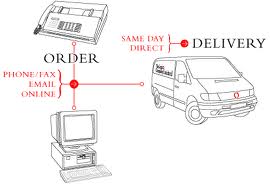
Amazon has announced the opening of scores of satellite warehouses to permit same-day delivery of their faster moving items. They are catching up in time and place utility. Amazon’s advantage isn’t that they have guarantee the lowest price. Their same day delivery might be useful for a last-minute birthday gift, but why would they invest in all that brick and mortar for the occasional retail purchase?

They wouldn’t. I think they are investing  with an eye towards wholesale distribution. If they are, then they don’t plan on doing it by having a zillion salesmen in the field buying lunches for customers. They will do it with technology, and small distributors who want to survive should respond in kind.

Posted in Marketing and Sales | Tagged , | 2 Comments

2 Responses to Is Distribution Dead?

  1. Passing on to clients – thanks.

  2. John….SAP/IBM Global Services has taught companies to ‘save’ through better logistics. Ship full truckloads not LTL. Thus the growth of Amazon and others as a ‘redistributors’.

Leave a Reply

Your email address will not be published. Required fields are marked *

Should You Sue?

This column appeared as an op-ed piece in this week’s San Antonio Business Journal titled “Most Legal Battles Played by Risk Rules.”

If you are in business for any length of time, eventually you will face a situation where the only solution appears to be the legal process.

A customer who doesn’t pay his bill, a supplier or contractor who doesn’t deliver, or an employee who leaves for a competitor and “steals” accounts all may create situations that cry out for punishment.

Sometimes just being successful seems enough to draw lawsuits, whether justified or not.

I know of one contractor who has been sued twice in recent months for a project that his company hasn’t begun.

Just being listed as a supplier in the contracts was sufficient to have him named as a defendant. His company will eventually be excused, but only after spending thousands of dollars on attorneys and motions.

Being involved in a business lawsuit comes in two flavors — as the plaintiff and as the defendant.

As a defendant, there is nothing like the initial shock and feeling of violation that comes with receiving a summons. The accusations against you may have no basis, but now they are filed with a court of law, and you’ve not had any opportunity to tell your side.

It feels like someone is standing in a crowded room yelling out lies about you, and you are forced to sit silently and let them do it.

As the plaintiff, however, it feels great to load up the claim with every bit of pain and anger the other party has caused you.

Now the other guy will know how unhappy you are. He is finally forced to listen to your issues. He will see that you are serious about making him live up to his obligations.

The most common justification that I hear for a business suit is “They need to be taught a lesson.”

Like Mattie Ross in True Grit, “You will hear from my lawyer!” is an overused threat, but one that gives immediate satisfaction to the utterer.

In business, it can be the opening shot in a process that is lengthy, distracting and expensive.

Most of us have played Parker Brothers’ “Risk- The World Conquest Game.”

In it you build up armies, and take territory by attacking. Dice rolls determine the winner of a “battle,” and the scoring system is heavily weighted to favor the defender. Experienced players know that winning and holding a territory usually requires a numerical advantage of at least three to one before starting a battle.

If you are tempted to launch legal action against another business, you would be wise to remember the strategy in Risk.

Pressing forward in litigation is likely to cost you about three times what it costs the defendant. Once he counters your claim, an unbiased judge or jury may not see your side nearly as clearly as it appears to you. Using the legal process to solve business disagreements costs time and money, and there is always a chance that you will lose.

Regardless of the outcome, you will make a permanent enemy.

Of course, there are times when a situation is so expensive or so egregious that you have no choice but pursue it to the bitter end.

Before you start, ask yourself whether you are willing to play by Risk Rules.

Posted in Entrepreneurship | Tagged | 2 Comments

2 Responses to Should You Sue?

  1. I am a lawyer and an investment advisor. I have never sued anyone or been sued, but I have negotiated many settlements for clients. Those that did not settle and chose to sue have largely been sorry. The emotional cost, the time involved and the many sleepless nights generally make you a loser even if you win.

    Most of the time, it is better to be wronged and trust that the good Lord will make it all right in the end.

  2. I have been fortunate that in all my years in business I have never sued or been sued. I have always tried to treat everyone fairly and do business with reputable people and so far it has paid off. Reasonable people can come up with equitable settlements if there are disagreements.

Leave a Reply

Your email address will not be published. Required fields are marked *

Unlimited Time Off From Your Business

The second “rule” on our downloadable poster “Your Rights and Obligations as a Business Owner” is:

You have the right to unlimited time off with pay.” followed by the corollary obligation; “You have an unlimited obligation to customers. Business deadlines and schedules have priority over your personal life.”

In my “Where’s Waldo” post a couple of weeks ago I discussed the impact ( or lack of it) resulting from an owner who comes and goes at changeable hours during the day. If you didn’t read it, the reality is that most employees don’t know where you are when you are out of the office, and aren’t really that concerned about it.

The number of hours an owner works in a day or week are often influenced by what he or she thinks the employees will think. The same isn’t true for vacations. Employees earn vacations and take them. They expect the boss will do the same. In the absence of any morale impact, why then are so many owners reluctant to take more than a few days away from the business?

They are afraid that the business will fail without their constant attention.

A huge majority of the entrepreneurs whom I coach list “more time away from the business” as a top goal. Many haven’t had a vacation longer than a 4 day weekend in years. A few take a week with family annually. Very few take two weeks at a time.

In a start up business the owner is usually the primary revenue generator. If the owner goes away, the income goes away. That isn’t what I am discussing.

I’m talking about companies with ten, thirty or even 100 employees where the boss is chained to the business all year. There are clearly people to do the work of the business. Sales will continue, invoices will be sent, money collected. Why then, is the owner unable to leave?

The rationalizations vary, but they fall within a narrow range. “I don’t have anyone who can price orders like I can.” “I’m the only one who can deal with the difficult customers.” “They won’t watch our quality as closely as I do.”

It all comes down to the same thing. “I don’t trust my employees to make important decisions.” Why is that? Probably because they don’t have to. You are there all the time, and there is no risk for them in letting you make all the decisions.

Training employees to make decisions comes with some risk. They will make mistakes. In “The One Minute Manager Meets the Monkey” (Blanchard, Oncken & Burrows, 1991) there is an excellent rule of thumb for delegating decision-making authority. If the risk is small, the employee should decide, and then tell you what was done. If the risk is large, the employee decides, but checks with you before implementing. Using this simple approach trains the employee to make decisions, while keeping the risk of a bad call within reasonable boundaries.

I feel badly for the business owners who’ve never had the joy of hearing an employee make a good decision. The effect is like a narcotic. Once you realize that they can do it, you have only one problem left to overcome. That is the personal security of knowing that they need you to make all the decisions.

Here is a news flash. You own the company. You can still make decisions whenever you choose. But you can also take a real vacation.


Posted in Entrepreneurship, Management | Tagged , , , , | 1 Comment

One Response to Unlimited Time Off From Your Business

  1. I had a discussion with a restaurant owner last week; he has just a few employees. But I found it fascinating that he is able to take reasonable vacations with his family. His philosophy is, “I put my faith in God, and if the place doesn’t burn down while I’m gone, then it’s OK.”

    A little humorous, sure, but it shows that he treats vacations as important. And he does a fairly good job of preparing people to run the business while he’s gone.

    I also find it fascinating how he incorporates his faith into this decision. It’s not like he publicizes this as a Christian business or anything – but his spirituality is a natural part of how he makes decisions.

Leave a Reply

Your email address will not be published. Required fields are marked *