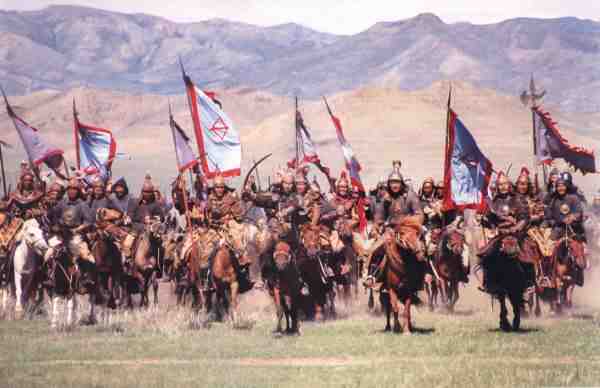
Poland has been conquered numerous times in history. Since the 11th century, it has been partially occupied, partitioned, or fully subjugated by the Germans, Russians, Austrians, Mongols, Tartar Muslims, French (under Napoleon), Prussians and Hungarians.
The Poles aren’t a timid people, and they have given good account of themselves in numerous battles. Their role as repeated door mat is largely due to a single factor. Bad luck.
First, Poland straddles a historical divide between western Europe and Western Asia. It is on the path of anyone from either side who wants to get to the other.
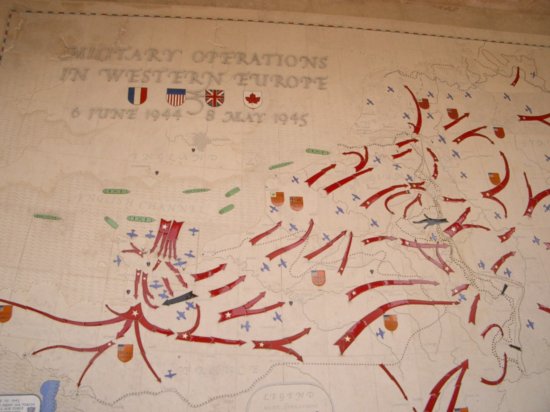
Second, Poland is mostly rolling plains with limited forests. It’s the easy way through. 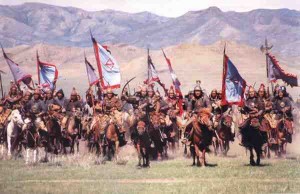 It was also ideal terrain for cavalry manuevers, and later for tanks. If you want to put your military muscle and technology to good use, Poland is just the place to do it.
Understanding the Battlefield
This is the last of a five-part series on dealing with a flat economy. Like Poland, you are just suffering a spot of bad luck. If you were running your business in the 1960’s, 70’s, 80’s or 90’s you had a rising tide. The economy was growing, the population was growing. Americans were largely young, ambitious and hard-working. Technology was driving productivity. Like a tank commander in Poland, if you pointed in the right direction and didn’t run into problems, you could go a long way.
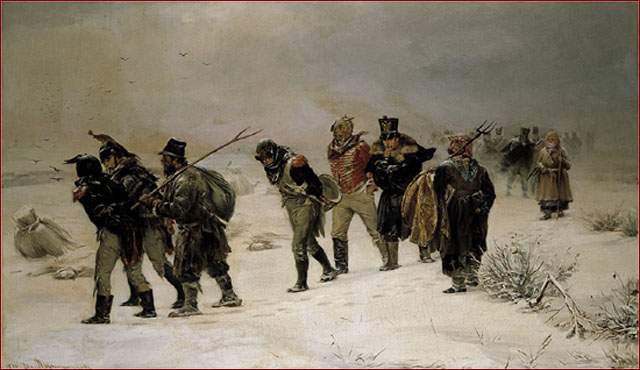
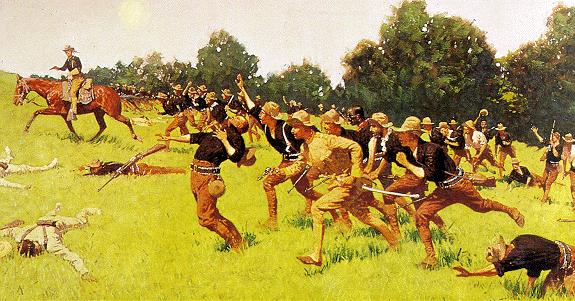
Now you are a foot soldier, and it is winter. Think of Napoleon’s long retreat from Russia (which included Poland at the time). He invaded Russia with 500,000 men. He left with 40,000. I don’t think the business climate of the next few years will be that bad, but it will not be kind to the unwary and unprepared. If you think that the recession will end, and things will go back to the way they used to be, you are among the businesses at risk.
I will briefly summarize again, at the risk of sounding strident. The largest and most ambitious generation in American history is leaving the workforce. Technology continues to drive productivity, but at the cost of eviscerating the middle class. Consumers are saddled with massive debt, largely secured by overvalued real estate that has collapsed. Emerging economies are permanent and powerful competitors in the world market. An economy that is predicated on people performing services for other people is facing precipitous shrinkage in both their prime target customers (Boomers who were too busy earning money to do things) and the disposable income of all their customers.
These are neither predictions or opinions. They are facts. If you take them into consideration as you plan your business, you can still win.  Ignoring them is like pretending that it won’t snow in Russia this winter.
The Battle Plan
We borrow many business terms and vocabulary from the military. One of those is strategy. Roman commanders were discussing strategy 2,000 years before there were corporate “retreats” (another military term that hasn’t fared as well in the translation).
You’ve heard it before, but now it is time to pay attention. Businesses that have written plans are far more successful than those who don’t. Most of the studies done by academia are on “strategic” plans for start-ups, and they show little correlation between the plan and funding.
You are not running a startup. You are running a business with people who need to know what is expected of them. Who need a yardstick to tell them if they are on target or not. Who need to understand when they are supposed to have something done. That is a business plan, not a strategic plan.
Begin with SWOT (Strengths, Weaknesses, Opportunities and Threats.) Strengths and Weaknesses are internal to your organization. Opportunities and Threats are external.
Validate them! If you think your strength is great customer service, survey your customers to see if they agree. If one threat you identify is an industry that is in decline (yours or your customers’), dig through economic or trade association reports to see if it’s true, and by how much.
Now you can set goals for the coming year. How do you develop goals? It’s easy. Think of things that will leverage a strength, fix a weakness, capture an opportunity or eliminate a threat. For example, opening a new market for your labeling machines, which  have traditionally sold to bulk mail houses, might come under any of the four. Leverage your expertise in processing (strength), diversify from a customer concentration (weakness), pursue new markets (opportunity) and exit from a failing industry (threat).
Limit your goals to a few (In The Alternative Board we focus on three to five) and make sure they are Specific, Measurable, Attainable, Realistic and Time-sensitive. You are now 90% through the “difficult” part of planning. All that remains is laying out the steps for execution.
In our label machine example, you can easily fill in the blanks. What do you need to do? Understand the other industries that need labeling machines. Find out which one is biggest, or most lucrative, has weak competitors, or would benefit most from your expertise. Get a list of prospects. Test their receptiveness to your product. Roll out a marketing and sales plan.
At any step along the way, you might decide that this isn’t a good idea. That’s the whole point! You move on to the next idea while your competitor continues to knock on the doors of the wrong prospects, or promotes the wrong product. If you fail in a new initiative that was begun on the fly, you seldom know whether it is a bad idea, or whether you abandoned a good idea just because you executed it badly. Goals that are approached step-by-step help you avoid that vagueness, and the wasted resources associated with the lack of a plan.
Battlefield Tactics
With goals you pick the ground you plan to take (or defend). Now you have to deploy the resources to make it happen.
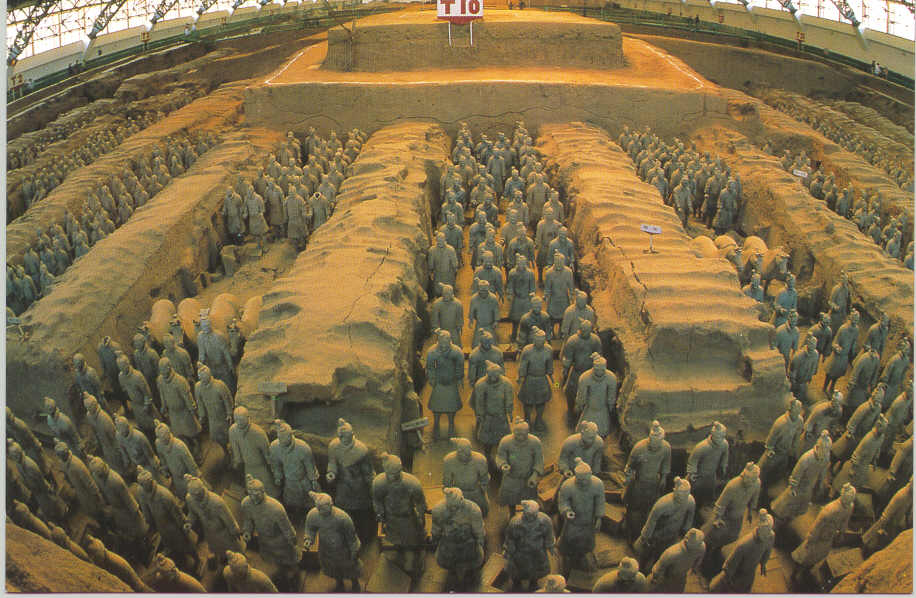
Here I will bow to Sun Tzu, the Chinese warrior who wrote down the basic concepts of battle tactics 2,600 years ago. He gave us the major concepts you need to employ to grow in a flat economy.
“Find out the conditions by comparing five things- the way, the weather, the terrain, the leadership and the discipline.”
The way: Do you have a plan, and do your employees know what it is? Do they know what they are expected to do?
The weather: Watch for competitors who don’t consider the weather. Prepare to flank those who stall or get bogged down. There isn’t enough business for everyone. When a competitor looks weak, focus your efforts on making him weaker. Target his customers, recruit his employees, solicit his vendors. This isn’t a game, and we can’t all win.
The terrain: You know it is going to be flat. That means you are putting your attention towards finding new business and diversification. (An army can take ground with cavalry, but can only hold onto it with infantry.) Let others cut back and wait for things to get better. You can’t economize your way to growth, and they will still be waiting for things to improve when you have moved past them.
The leadership:Your ability to inspire and retain good people is critical. (See last week’s post.) More on that further down.
The discipline: Here is where many entrepreneurs fail. You have to stick to the plan. You will get tired. You will get discouraged. There’s more on his topic in today’s post, as well.
Leading the Troops
Good employees will still be hard to find, and keeping them will be harder. In “Beating the Boomer Bust,” the presentation I give to business owners around the country, I discuss the differing values and motivations of the next generation of management.
You will need to lead all the time. Many of us are accustomed to charging up the hill, and then resting for a while. The pressure will be  constant, and resting will find you later trying to make up for lost ground.
Share results, I belive every company should have at least a limited form of open book management. Employees want to know that they are doing a good job, and that their work helps to make your business successful.
Build loyalty. All that “warm and fuzzy” stuff means more to the current generation of workers than to any before them. Recognition needs to be built into the system. Your business will have to be a place where they can grow, even if it means helping them to move on to the next phase of their lives. They aren’t going to stay forever, but they will stay longer if they like what they are doing.
Winning the War
What is your long-term objective? If you are over 50, it is probably a lucrative exit. If you are younger than that, it is growth and financial success.
All of your strategy and tactics need to support the long-term objective. If you are in growth mode, watch competitors for acquisition opportunities. Make acquisition planning a business goal. Talk to your banker and local business brokers to see what it would take to but a company. You might be surprised at how inexpensively a business can be bought from a tired owner with declining profits.
If you are looking for an exit, begin planning how to make your company more attractive than others. It will be a competitive, buyers’ market as the Boomers sell their businesses. You may need to reduce your extra perquisites to improve operating margins. You should know your industry numbers, and how you stack up. You’ll need a stable management team that can function without you.
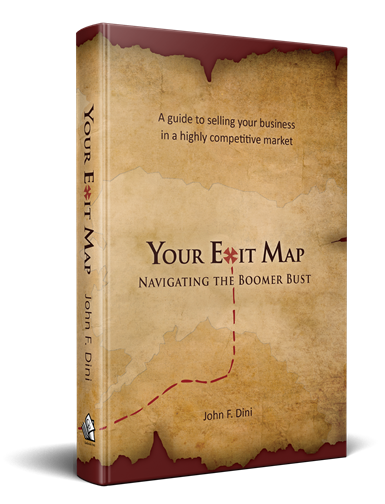
In fact, I advocate building your own exit strategy, by developing your managers as the next generation of owners. Here is a shameless plug: Check out my exit planning website; The Exit Map® or my book “11 Things You Absolutely Need to Know about Selling Your Business.”
Protecting the General
Did you ever notice how troop formations are arranged to give the maximum protection to the top officers? (Another military-to-business term, there.) There is a reason. Armies have understood for millenia that if the general gets killed, they lose.
You have to protect yourself for the good of your company. If you are working harder than ever before, stop! You need to pace yourself for a long run. If you are saving money by doing the work of three  people, stop! You don’t have time to plan, to innovate, and to analyze the world around you. That is far more dangerous than the cost of an extra salary.
Once you accept that things aren’t going back to the way they were, or at least they aren’t for quite some time, then you can start to look at your business with fresh eyes.
Once you understand that doing more of what you used to do won’t change the world around you, you can do something different.
And here is the last piece of good news; the ray of sunshine in all this talk about battles and war. You are a guerilla fighter, the indigenous resistance movement of the business world.
A small business doesn’t have to take over a whole country. You don’t have to protect a long supply line, or defend cities. You get to choose where and when you will fight. You pick the time and the place, execute your plan, win and go home.
And as proven in wars from the American Revolution to Viet Nam, those tactics can work very well for a long, long time. In fact, they can work until the bigger, more powerful and more sophisticated armies give up and go home.

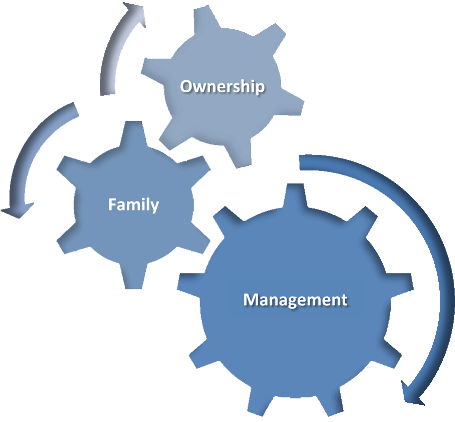 decisions, and ownership. For our purposes, all three must be present in order for it to be a “Family Business.”









Ouch, I am living this situation. Vision and leadership is the challenging issue. There is not one right way to run company. I learned from you that each business reflects business owner’s personal values and style. Great article and if others respond too, hopefully you will share more on this topic and transitioning family business.
Additional Information,
Actually the most stable relationship system is a three party system where the third party acts as a calming, reasonable voice that facilitates constructive communication and decision making. In family business succession work we have long advocated a three system view: Family, Business and Board. In the latter we work toward a balance of participants between family representatives and respected, independent outsiders with experience and expertise relevant to the current and future work of the business. We typically do not recommend professionals – lawyers, accountants, consultants… who are aligned and indebted financially to the business. The challenge is to start this process long before succession – through family education and involvement of key family members in learning about and appreciating the complexities of running and growing a successful family business. The earlier the better…
Bill Seelig,
bill@seeligs.com
Bill Seelig
Legal succession planning is also important for family businesses. This is especially true when one beneficiary of the owner’s estate is clearly the right person to take over operations and another beneficiary is clearly not interested.