
Getting Smart about SMART

It is approaching 2012, and (hopefully) most of us are finalizing our plans for the upcoming year. In our groups of The Alternative Board, we are asking each member to state their sales and revenue objectives.

We all know that goals are supposed to be SMART, the acronym for setting a goal that is well…smart.  When I ask an owner whether he or she sets SMART goals, they usually reply “Oh sure. That’s Specific, Measurable, and uh…uh…”
Not knowing the acronym past the first two words isn’t all that surprising. Many goals really address only the first 2 points. “We will increase revenues by 10% in the coming year.” That is both specific and measurable. Unfortunately, it doesn’t say anything about how those revenues are supposed to be generated. Is it coming from price increases? Does it include new stores or new lines, or it is an increase of legacy business? Who is responsible for the increase?

The most popular definition of SMART when Googled is Specific, Measurable, Attainable, Realistic and Timely. I have always had an issue with that. In practical terms, how could something be attainable and unrealistic? Or could it be realistic, but unattainable? Using 40% of an acronym to say the same thing twice makes it pretty dumb, in my opinion.
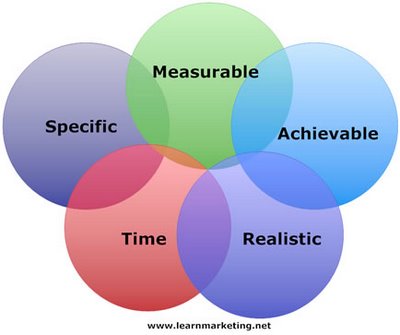
There are several widespread variants. One swaps “attainable” for “accountable.” That is clearly better. Anyone who has managed a team understands that you can’t expect an objective to be accomplished unless someone is given responsibility for doing it.

There is an adage in management that says “If you say anybody can do it, everybody will know that somebody will do it, so nobody will do it.” 

Another variant of SMART trades out “realistic” for “relevant.” That addresses the redundancy issue, but I’m not sure why we need “relevant” as a critical point in formulating a goal. Is that because so many people go through the planning process to develop irrelevant goals? What would they look like? “As the largest widget maker in our market, we will become known for having the nicest employee lunch room?”

One definition uses “results-focused.” Besides the problem with loading any acronym with hyphenated words, it also seems redundant. SMART is supposed to be how you make goals results-focused. Saying we will make a results focused goal by using a mnemonic that says it should be results-focused seems just a bit obvious.

Most folks get the last one, or at least some of the approximations of it. “Timely” is easy to remember, but grammatically vague. Does it refer to a goal that is being set at the right time? A goal that recognizes market or industry conditions as favorable? “Time-bound,” Time-sensitive,” and “Time-framed” are all common variants. They all are somewhat stretched to mean basically the same thing, which is “deadline;” but SMARD just doesn’t have the same ring to it. We will leave the time reminders alone. Pick the one you like. I’m using “Timed,” since it encompasses the idea of a schedule, not just a deadline (and it isn’t hyphenated).

So we can generally accept three of the five. The fact that people remember them, and they are generally consistent, indicates that they are worthwhile. It is the middle ones, the A and the R, that people forget, or keep changing in attempt to improve on the acronym.

Here is my change. Keep the “A” as attainable. Every good goal conversation should engender a discussion about whether we can do it or not. That follows specificity and measurability. It then leads to the discussion of “How?”

The “how” part of the acronym is Resourced. No goal makes sense unless you are committing human and physical assets to it. Resourcing a goal requires that you assign responsibility, allocate budget dollars, and tell those accountable for it what its priority is in their work plan.

So when the sales department is given a goal of 10% increase in revenue, Resourcing builds in the process of “how?” Do they get to hire more reps? Does marketing buy more advertising? Does the incentive plan change? Is purchasing bringing on a new product line? Once you determine “how,” then you can progress to “when.”

So my definition of SMART is:

Specific: What exactly do we want to accomplish?

Measurable: How will we know that we accomplished it successfully?

Attainable: Is this within our capabilities?

Resourced: What human, financial and other assets will we apply to this objective?

Timed: When is this going to happen?
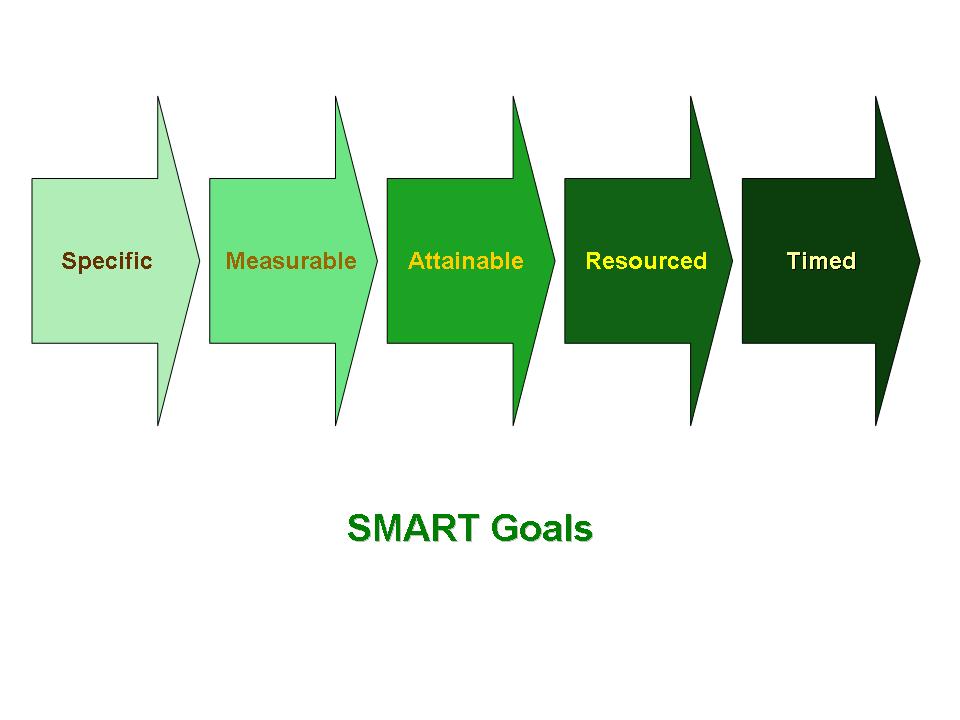
This SMART follows a logic process, avoids duplication, and should be more easily remembered.

Posted in Leadership | Tagged , , | Leave a comment

Leave a Reply

Your email address will not be published. Required fields are marked *

Trimming the Customer Tree

Anyone who has shopped for a live Christmas tree knows the drill. They have some on display, but none look exactly like what you want. You start looking through the trees that are still bundled up. If one looks promising, you have the lot guy cut the twine and spread it out for your examination.

The bottom branches are never as nice as the top branches. They get less sunlight, and the branches closer to the trunk are brown and thin. The vendor doesn’t like to trim the bottom, since he is usually selling trees by the foot.

You have a choice. You can buy a tree of the length you need, and use extra ornaments and lights trying to make the lower branches look as nice as the upper ones. or you can spend the money for a bigger tree, and trim off the bottom to leave only the good parts. Either way, those bottom branches are going to cost you time and money.

A business owner told me a story the other day. “At the end of every year we sat down and classified our customers into A, B and C accounts. We would discuss how to better serve our A accounts, and how to find more like them.”

“One year we were doing this with a business coach assisting in our planning. She asked “What are you doing with your C accounts?” We were stumped. We didn’t do anything with our C accounts, we just knew they were C accounts.”

“She convinced us to jettison our C accounts. Numerically, they were about 40% of our client portfolio, but a far smaller portion of our revenue. We helped them find a more appropriate vendor. Since then, we are working less, serving our A and B accounts much better, and are far more profitable.”

Every business owner reading this column knows how that story is supposed to end as soon as they read “What are you doing with your C accounts?” We all talk about focusing on our best customers. We know that the Pareto Principle (20% of customers generate 80% of revenue or profit) is true. But year after year we look at our C accounts and make excuses.

“We have the time, so why not make a little extra money?” “A lot of those people have been with us for a long time.” “Some of those accounts may grow into something bigger. Remember Jones Enterprises back in 1994? They were nothing when they started with us.”

Certainly there might be a nugget in that pile of Fool’s Gold. When I go to Las Vegas I put money on the crap table. I’ve walked away with a lot more than I came with, once or twice. That doesn’t make playing craps a good business decision.

You can identify the nuggets. In truth, someone who is sharp, knows his or her business, or is fun to work with probably isn’t in your C list to begin with.

The best place to find new business is from your best customers. They usually have better contacts, can give better quality referrals, and represent more credible testimonials. Not to mention the potential for more business from them, if you only had the time to cultivate it. That could be the time you are spending on the C accounts.

Lopping off the bottom of the customer tree will cost you a few dollars in the short run. Just like a Christmas Tree, it gives you a better base to work from, and a more satisfying end result.

Posted in Marketing and Sales | Tagged , , , | Leave a comment

Leave a Reply

Your email address will not be published. Required fields are marked *

Thanks for Everything

A British friend was commenting to me on how “odd” he found the American celebration of Thanksgiving. “There is no equivalent holiday in Europe, or anywhere else in the world.” he said. “You have an entire day devoted to conspicuous consumption, where everyone anticipates eating and drinking far more than usual, and boasts about how excessive their indulgence was. It’s so quintessentially American.”

Of course, Thanksgiving Day is just a warm-up to what follows; the holiday shopping season. How did we become disposed as a nation to consume as a national sport?

I think it is an expression of luck. We began as a series of small settlements on the coast of the greatest treasure trove of exploitable resources on the planet. Not only did the European colonists find fertile ground for agriculture, but there was ample water, navigable rivers, vast forests and abundant minerals. Success was only limited by how smart you were, and how hard you were willing to work.

Of course there are plenty of issues of exploitation in other areas as well. Indians and slaves didn’t have the same opportunities. I’m not an apologist, and some of our history is shameful, but so is some of the history of every other nation on Earth.

For over two hundred years we’ve attracted the ambitious and creative from all over the world. They came here because they would be allowed to succeed or starve according to their abilities. After a couple of centuries some of the momentum has faded, and we are getting a bit calcified around the edges, but the abundance that has characterized our culture remains.

My clients are all small business owners. A few have outgrown any reasonable definition of “small,” but even those started out that way. Most are the founders of their companies. They set out to build a business with a set of assumptions that apply in few, if any other places on the planet.

They set up their businesses under a system of laws that protects their right to create and keep wealth. We complain about burdensome regulation and taxation, but we don’t even consider the possibility that we might be building an enterprise that someone else with better connections and political power could confiscate just because it is successful.

We have a free labor market. While unions and labor laws restrict the ultimate freedom to shamelessly exploit employees, few of us would argue that is a completely bad thing. We can compete for better workers, and give the one’s who don’t produce the right to find success elsewhere. No one tells us whom we have to hire, or forbids us the ultimate right to fire them.

We can protect our ideas and property. The concept of differentiation is basic in American business. In much of the developing world it’s difficult to develop something that isn’t stolen and copied the moment it succeeds. That includes brands, designs, and creative content. How much does it restrain an economy when its best ideas are hidden and secret?

We are free to fail. At last we are free to do so until we are “too big to fail” which by definition isn’t an issue for small business. Our business markets are still among the most Darwinian in the world. A bad idea, sloppy execution or lack of commitment can cause a small business to disappear without a trace.

What we take most for granted is our freedom to act. We live in a society that is predisposed to action. With an Internet connection or a small store front we can be in business in a matter of days. There is no issue getting power or communications supplied. We can hire employees without proving any ability to pay them. All that it really takes to go into business is a desire to do so.

It’s messy, and there is collateral damage when the dishonest or incompetent screw it up. That doesn’t change the fact that hundreds of thousands of people go into business for themselves every year. Most don’t make it, but if it wasn’t so easy we wouldn’t have the successes either.

So I’m thankful to live in a place and time where I can take a shot, and no one is allowed to determine whether what I choose to do is good for me or not.


Posted in Thoughts and Opinions | Tagged , , | Leave a comment

Leave a Reply

Your email address will not be published. Required fields are marked *

When is a Bonus not a Bonus?

And yet, you don’t think me ill-used, when I pay a day’s wages for no work.” That statement by Ebenezer Scrooge to Bob Cratchett in 1843 recognized the then relatively new custom of letting wage-earners have a day off for Christmas without docking their pay. One hundred and seventy years later, business owners aren’t just expected to pay for a day of leisure. Now we have the tradition of the “holiday bonus,” where employees are given additional money beyond their salaries at the end of each year.

As we enter the annual Holiday Season, the advisory groups we operate as The Alternative Board® always bring up the question of how to bonus at year-end. Not giving anything is nearly unthinkable, although it has occurred more often with the economic challenges of the last few years. Should the Holiday Bonus be tied to some performance measure, or is it strictly a sign of the owner’s largesse towards his or her employees?

The first known use of the word bonus was in 1773. It’s defined as “Something more than is expected or strictly due.” But what is it when the “something” is not only expected, but is perceived as due by the recipient?

Incentives fail the basic definition above. If an employee is due money by contract or understanding in return for specific performance, it isn’t strictly a bonus. Yet it has become an accepted use, and is widely understood in that context. Similarly, if a payment at year-end is given according to a generally understood formula, such as years of service or salary level, there is no surprise attached to the payment.

How do you deliver the bonus? Many employers just add it to the normal paycheck. I know a number that complain every year that less than 10% of their employees say “thank you.” That argues strongly against it being unexpected.

Others have a documented program for earning incentive payouts, such as a share in the profitability of the company. These are paid at holiday time, partially to avoid the expectation of something additional. They are called holiday bonuses, but are actually just annual performance incentives with convenient timing.

A real Holiday Bonus should be a gift. It deserves to be credited for what it is; money coming directly from a business owner’s pocket to the employee’s as a sign of thanks and goodwill. It shouldn’t be attached to specific performance, although some subjectivity is normal and appropriate. Like Fezziwig’s Christmas party, it s something you do in the spirit of the season, without expectation of material return, and it is supposed to generate some feeling of gratitude.

As a gift, the Holiday Bonus should be in the range of gifts you would give to others you spend the whole year with (hint: that should be your family.) Why would you spend $300 on gifts for a spouse or child, and $1,000 on an employee? Do you like them that much more?

If you already have a structure for year-end incentive payments, by all means keep to your commitment. If you traditionally tend to “throw in a little extra for the holidays,” don’t. Make that a separate check, preferably on a separate payroll. Make sure that the employees can differentiate “normal” payments from your gift.

Include a note with the bonus. In most cases, telling the employee how much you value their contribution means as much or more than the money. I would be surprised if the addition of a note doesn’t at least quadruple the number of “thank you’s” you get.

If substantial year-end payments are traditional and expected, but historically subjective, start to change that now. Designate part of the payment as related to company or individual performance, preferably with a reference to profitability. Then give the rest as a bonus.

The next step is to make a New Year’s resolution  to document a measurable incentive program, so that next holiday season any bonus is really a bonus.


Posted in Leadership, Management | Tagged , , | Leave a comment

Leave a Reply

Your email address will not be published. Required fields are marked *

When is the Right Time to Sell?

In the last few weeks I’ve had several conversations with owners about selling their companies. In one case a professional firm with whom I’ve worked for the last 4 years completed a merger with a large national company. That was a “Boomer Bust” transaction, driven by an ageing partner group and a lack of willing successors in the next generation.

In another, a relatively young client received an unsolicited offer for the company. He wasn’t planning to sell for at least another ten years or so, but it’s a very interesting offer. Should he sell now for less than he eventually hoped, but for what is still a very large sum?  (Say- enough to start your own foundation.) What is the time value of having the money now, and ten years more to go in a new direction?

In the third, the owner received an offer to consolidate with an entity that is over a thousand times his size. The purchase of his company may be part of their consolidation strategy, or it might just be the equivalent of a signing bonus to bring him onto the management team. It isn’t quite enough money to retire on, or at least not in the lifestyle he currently enjoys.

In the fourth, the owner has quickly built a business that is both lucrative and very attractive to suitors. Should he put it on the market now, and begin something else at a young age with enviable financial security? Or should he grow this business in new directions, and keep all his eggs in this one basket?

In each case save the first, the issues are similar. The owner is far from retirement age. (They range from the early thirties to early fifties.) The money available isn’t theoretical it is either a concrete offer, or a realistic estimate of value in an active acquisition market. The proceeds would be enough to guarantee financial security, but not enough to permit unlimited dreams and ambitions. In the words of Bill Gates, it isn’t “escape velocity” wealth.

Perhaps most importantly, none of the owners are the slightest bit interested in traditional retirement. They all enjoy their industries, and want to keep working. All three are in excellent health, and have young families whose financial security is a high priority.

In my book, “11 Things You Absolutely Need to Know about Selling Your Business,” I discuss the importance of knowing what comes next. in Bob Buford’s book, “Half Time” he discusses how a middle-aged executive who has reached financial security can approach the second half of his or her life, the part where they want to give back to the community.

But these owners aren’t middle-aged. They want to keep building. They are still excited by the chase of business. They still seek the adrenalin rush of the big win. They look in the mirror and, with the insecurity of every entrepreneur, ask themselves the most telling questions.

“Am I good, or was I just lucky? Could I do it again? Could I succeed with something else I don’t know, or in an industry where I don’t have experience? If I give up my company, am I giving up who I am?”

We are the hunters, Hunters don’t succeed by looking back at what is behind them. They are genetically hard-wired to look forward at what is next, where the objective is. When you start thinking about selling the business, it isn’t always because you are tired, or bored, or looking to do something else. Sometimes, a business decision is just a business decision.

But for an entrepreneur it is never “just” a business decision. It is about life, and self-image, and fear, and desire, and family, and ego, and security, and insecurity. It’s about looking where we never look- back over our shoulder. And it’s about looking further ahead than the next monthly statement or sales cycle. It’s about going where you may not set the rules. In fact, you may not even know the rules.

And the answer, and the reasons for the answer, are different for each person. Just as they will be for these three.

Posted in Exit Planning, Thoughts and Opinions | Tagged , , | 1 Comment

One Response to When is the Right Time to Sell?

  1. Oswald Viva says:

    The right time is NOT when you are down because the business is down. Case in point: a few years ago Mr. X was suffering through a low point in the business because of poor market conditions. He was so affected by it that was seriously thinking about selling (obviously at a very low price because of the down turn in the business). I knew the business had a lot of potential and that the down cycle would be reversed, so I wanted to change his mind. Rather than trying to convince him I decided to talk with his wife who was also very active in the business. I asked her: “What would you and Mr. X do after you sell?” She replied: “I guess we would start another business”. So I asked her: “Tell me, how were the beginnings of this company?” She said: “Oh my God, they were terribly challenging and not much fun”. I said: “So, do you really want to go through all that again?”. She looked at me with puzzled eyes and said: “I never thought about it that way; you are right I don’t want us to have to go through that again”. So they decided to keep the company and work to return it to its rightful place. Today the company is four times the size and they get unsolicited offers for many times the price they would have had to sell at the low point. The moral of the story then is: sell when business is doing well, never when it is down.

    I cover this subject in detail in my book “Its Lonely at the Top”; “A Practical Guide to Help You Become a Better Leader of Your Small Company”.

Leave a Reply

Your email address will not be published. Required fields are marked *