Does Your Business Need to be Leaner and Meaner? (Part 1)

I’ve been surprised by the tone of my clients’ conversations since the beginning of the year. They want to get tougher. They want to plan more. They want to find the chinks in their armor, and sharpen their weapons.

These are businesses that came through the Great Recession, often with flying colors. They remained profitable, and in some cases set records for income. They continued to grow. To any casual observer they became “lean and mean.” Yet the overarching theme seems to be “We still aren’t good enough yet.”

All small business owners do well by cultivating a healthy streak of paranoia. Even on an average day there are enough potholes out there to knock your company out of alignment, and a few that can take a wheel off. Even so, owners tend to dodge challenges as they arise, and not spend too much time looking down the road.
These haven’t been typical New Year’s Resolution types of conversations.  They are something deeper than that. They evidence a general uneasiness about what’s coming. While the owners hope that things will get better, they fear that they will get worse.  It’s a feeling that someone, somewhere is plotting at this moment to take their business away, and a desire to be ready before they can even identify any specific threat.

Certainly there are enough clouds on the domestic horizon to give anyone pause about the potential of the coming year. We face a dysfunctional national government, higher taxation, increased mandates for employers which will carry unknown costs, anemic job creation, global competition, and a difficult lending market.

Internationally we have Iranian atomic ambitions, North Korean missiles, a European recession, China’s growing influence and increasing instability in the Middle East. While these don’t affect most American small businesses directly, they add to the incessant drumbeat of negative information crowding the airwaves.

So is this new-found focus on getting leaner and meaner based on a realistic need for improvement, or is it merely an emotional reaction to the media’s insatiable appetite for “crisis content?” I think it is the former. Small business owners need to be more competitive, even those who have already stepped up their game considerably since 2008.

I write and speak extensively about “The Boomer Bust,” the inevitable economic impact of retiring Baby Boomers. For the last 50 years, the American economy has grown on the population bubble of a generation who were both prolific producers and voracious consumers. A rising tide lifts all boats.

Now that generation is stepping back from both production and consumption. You can’t change demographics. The four European countries with the lowest birthrate over the past 30 years are Greece, Spain, Portugal and Italy. Their politicians don’t want to discuss that problem, because it is one they cannot fix. The USA has had sufficient population growth to avoid the dramatic GDP shrinkage of those countries, but we still face a decade or more of serious drag on our economy until the Millennials begin to enter the workforce in large numbers.

Our government, especially the current administration, is trying to provide a minimum standard of living and health care for both the ageing Boomers as well as for those who are marginalized by a lack of relevant education and training. They have to do it on revenues from a smaller, less productive generation caught in between. Some economists say that the recent “Fiscal Cliff” tax increases represent about one-third of the new revenue needed to accomplish this, even if we reduced spending by five times as much as currently planned.

History is inevitable. It can’t be changed. This is an effect of history, not merely of current events. I’m not deluded enough to believe that small business owners can impact the EU, or fix the Federal budget. We can only run our businesses.

I think the owners who feel the need to be better are correct. The efficiencies we engineered to survive the recession were just a start. The successful small companies of five years from now will look and function very differently. Next week we will begin to discuss how and why. I encourage my readers to pass this first installment along to other business owners who want to be among the survivors.


Posted in Thoughts and Opinions | Tagged , , , , , , , , | 3 Comments

3 Responses to Does Your Business Need to be Leaner and Meaner? (Part 1)

  1. Richard Pace says:

    Excellent overall assessment… looking forward to the details.

  2. Thanks for the post. Time to put this into action instead of
    just bookmarking it.

  3. craig eastman says:

    you know john, the ever present threat to small business will, as it now seems, never reduce in size. it is a constant effort to keep one step ahead of all of the negatives, including our government and the world. Looking forward to your continued input on this matter.

Leave a Reply

Your email address will not be published. Required fields are marked *

Business Plans and New Year’s Resolutions

For the last week or so, the regular denizens of my local gym have been “preparing” for the onslaught of Resolutioners, as we call them. Those are the folks that show up every year right after the holidays, determined to make the coming twelve months healthier than the last twelve.

Small business owners frequently do the same with their business plans at this time of year. They look at their previous year’s results, and determine that the coming year will be better. Every small business survey will show a high percentage of entrepreneurs who predict that the next year will be more successful. Like the Resolutioners, the real question is what will they do to make that happen?

Specific

Those who limit their objectives to good intentions are the first to disappear from the gym. They merely made a “resolution” to lose weight and exercise more (by far the most popular resolutions). Like owners who vow to sell more and spend less, their resolve has faded by the end of January. The Resolutioners decide they could just eat less to lose weight and not have to exercise. The business owners might start making excuses about spending decisions. Having determined to reduce expenses, they then decide that not cutting is the new magical formula to added sales. It seems easier, but it doesn’t accomplish the objective.

Measurable

A New Year’s resolution with a measurable target, say to lose 20 pounds, is a bit stickier than just “lose weight,” but not by much.”Increase profits by 10%” sounds more businesslike than “make more money,” but by itself is just as insubstantial. Those folks are gone by Valentine’s Day, give or take a week depending on the harshness of the winter weather.

Accountable

Some of the new gym arrivals come with a friend, a workout buddy to help keep them on track. For these, the odds of success are multiplied greatly. For a business owner, accountability needs to be more than just to yourself. A business coach, peer group, or even announcing the goals to employees and reviewing them regularly can be a big help. Even so, many will drift away as the year wears on.

Resourced

I originally tried to get my workout in the morning at the cost of sleep. Unfortunately, I’m one of those folks who needs seven hours each night or face more than my usual cognitive dissonance. I finally learned that going to bed at 10:00 was a prerequisite to getting up at 5:00 and functioning well. Trying to achieve your business goals by merely working harder (or its fallacious cousin, working “smarter”) is pointless. That is, unless you can point to how you’ve been slacking or working stupid in the past. If you can’t, then you will have to allocate real resources to the results you seek.

Timed

A year is too long a time period for practical goal setting. How many times have you said “I can’t believe 2012 went so fast?” How many times did you say that about 2011, 2010, 2009 and on and on? You need to have more frequent milestones. I recommend monthly targets for operational goals, and quarterly metrics for tactical objectives.

By March, most of the Resolutioners will be gone, and we can get back to our normal workout routines. Every year, however, a few of them stick it out and transition from being the “new guys” to one of the “old guys.” Eventually we will learn their names, and accept them into the brotherhood of those who have proven to be tenacious and disciplined enough to change their lifestyles permanently.

The same thing happens in business. There is a brotherhood or sisterhood of business owners who plan carefully, and who make the effort to stick to the plan’s execution.  Outsiders call them the wealthy.

Posted in Entrepreneurship | Tagged , , , , , | 1 Comment

One Response to Business Plans and New Year’s Resolutions

  1. Stan McBroom says:

    How true, with no measurement and someone to hold you accountable you will be back to your old ways in no time.

Leave a Reply

Your email address will not be published. Required fields are marked *

2013 Planning:
Try Starting with “Who”

For many years, I’ve begun each annum with my clients by helping them answer the Seven Questions,  some simple keys to basic planning for the year. This year the questions have been picked up by my friend Jim Blasingame at the Small Business Advocate, with his column reprinted in the Memphis Commercial Appeal, and are scheduled as a feature in January’s Tips From the Top, the national newsletter of The Alternative Board®.

With our clients, I’ve begun to incorporate the Seven Questions into a one-page (actually one-sheet, since it is on two sides) form that considers a number of additional factors. One of the items, and perhaps the most important after SMART Goals in planning, is a functional organizational chart.

Many small companies fail to achieve their goals because they lack sufficient quality in human resources. Simply put, they don’t have the horsepower to get them to the objective. Goals are fine, but if they depend entirely on the owner to accomplish, then their probability of successful implementation decreases dramatically.

Our functional organizational chart doesn’t focus on the operational role or job description of the employees. Rather, it asks the owner to look at the level of decision making, autonomy and responsibility of each member of his or her team. There are five levels.

Owners: In some companies partners or other shareholders bear some of the responsibility for implementation. Owners can be presumed (most of the time) to have aligned interests in making the company successful. In a good partnership, each owner can depend on the others to handle some aspect of the business entirely.

Independent Decision Makers: These are employees who run some segment of the business, or perhaps all day-to-day operations, without having to ask permission for their actions. They can dramatically impact profitability with their decisions, and have the authority to create or change processes. Every company should have at least a Second In Command (SIC) who answers only to the owner, and is compensated based on success. If you have more than one Independent Decision Maker you have a much better chance of growing the business. If you have none, finding or developing one should be your top priority.

Dependent Decision Makers: These are the middle managers and supervisors, who make decisions that affect profitability, but do so in a structured environment. They can’t make up new systems without running them past those to whom they answer, but they can determine the proper course of action within their area and prescribed processes.

Independent Implementors: These are the employees who act without ongoing supervision. They don’t have much flexibility in what they do, but have to be trusted to do it on their own. Salesmen, project managers, route drivers and foremen might all be examples of Independent Implementors.

Dependent Implementors: These are your first level, task based employees. They are expected to accomplish regular or routine work, according to documented systems and with regular supervision. For most of my clients, this level is filled in with job categories like “warehousemen” or “customer service representatives” instead of individual names.

Dividing your employees according to their autonomy can be a eye-opening experience. Some of my clients realize that the people just below them on the company organizational chart are actually two or even three levels down in decision making capability. Nominal SICs turn out to be dependent on the owner for ongoing guidance and support. That gap is a strong argument for why they are having difficulty in reaching their annual goals.


Posted in Management | Tagged , , , , , , , , , , , , , | 1 Comment

One Response to 2013 Planning:
Try Starting with “Who”

  1. Clint says:

    Thanks John…I’m mainly in the II category…Funny, when I discuss these kinds of things with others, they look at me like I’m analyzing way too much..I agree that these are important insights and that many Decision Makers don’t think this way…I’ll remember this breakdown and watch how companies use or not use it.

Leave a Reply

Your email address will not be published. Required fields are marked *

2013: Planning for Uncertainty

Every conversation that I’ve had with business owners over the last several weeks has revolved around the challenge of planning to do business in a political and economic climate that defies normal planning conventions. The sequestration budgetary measures scheduled to go into effect on January 1, 2013, popularly termed by Ben Bernanke as the “Fiscal Cliff,” has people making moves that may be brilliant, or foolish, or may mean nothing at all.

One client has liquidated his portfolio. Others are standing pat. Some are advancing capital expenditures to take advantage of expanded section 179 credits, which will expire on the first of the year. Others are delaying such purchases, in the belief that deductions will be worth more if tax rates increase. Large corporations have borrowed billion of dollars at historically low rates in order to pay special dividends before the end of the year. Small corporations are stripping their equity out as distributions, and lending it back for working capital.

Small business confidence plunged following the elections, largely because nothing really changed in the battle between a White House focused on expanded entitlements, and a Congress that refuses to pay for them. Whether action is taken to forestall the Cliff, by no means a certainty, no one expects it to be a “Grand Bargain” that will stabilize the deficit and begin to reduce our national debt.

The Economist magazine, among others, calculates the impact of unmodified sequestration to be negative five percent of the Gross Domestic Product, or a recession some 40% more dramatic than the shrinkage in 2009.

What we really fear is that the leaders to whom we’ve entrusted the running of the country are insane. Does either party think that they would emerge unscathed after engineering a depression?

The United States is a grand experiment. We are just over 200 years old as a nation, and as a form of government. The right to vote was originally restricted by age, race, gender and property ownership. No one would regard such a limited franchise as a democracy today. None the less, Thomas Jefferson predicted 200 years ago that this experiment would only last until citizens discovered that they could vote themselves largess from the treasury. In California, where less than 150,000 out of 36,000,000 people pay half of all the state income taxes, did those 150,000 really have a voice in the referendum for higher tax rates?

One hundred years ago, in 1913, the states ratified the sixteenth amendment, which reads in its entirety : “The Congress shall have power to lay and collect taxes on incomes, from whatever source derived, without apportionment among the several States, and without regard to any census or enumeration.”

This is not a diatribe against taxation. I don’t want to live in a country where the poor starve, or the sick lie begging on the sidewalk. I’ve been to some of those places, and I’m glad we are civilized enough to address social needs with tax dollars.

In order to generate those tax dollars, we have to run our businesses at a profit. The time we are wasting in trying to figure out what comes next isn’t helping anyone.

Posted in Entrepreneurship | Tagged , , , | Leave a comment

Leave a Reply

Your email address will not be published. Required fields are marked *

Santa Boss: The Role of a Business Owner

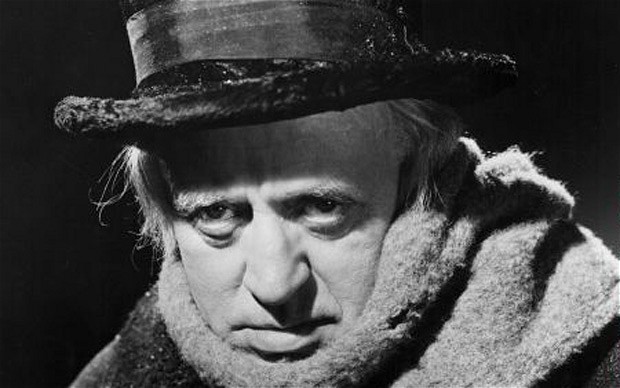
Ebenezer Scrooge was visited by three ghosts, so it’s fitting that I tackle the issue of the holidays three times. We’ve discussed terminations close to the holidays, and the custom of dispensing year-end bonuses. But in the end Dicken’s Scrooge was enlightened by the ghosts, and began dispensing his wealth to the Cratchit family (especially Tiny Tim), in amounts disproportionate to the market value of father Bob the clerk’s position.

Most business owners are wealthier than their employees. It’s your business, and you have the right to enjoy the financial benefits of the risk, the work and the sacrifices you make (or made in the past) by taking the profits as your reward. Yet many of us feel a twinge of guilt when we hear of an employee struggling financially. We provide a livelihood for families, and we feel that responsibility every day. When an employee is unable to meet his or her obligations, there is a little internal voice that suggests we should be doing something about it.

I know owners who diligently avoid having employees visit their homes, because they fear being labeled as “rich.” Others host a holiday party at their house every year, and feel that they are sharing their success with the staff by letting them see the material results of their collective effort. There is no obvious difference in the attitude of the employees between the two . Most of those attending the home-based parties still think that their boss is fair and generous. Some of those who have never seen their boss’s house still assume that he is filthy rich.

In a recent meeting of one of my groups in The Alternative Board® a member posed the question; “Why do you try to grow your business?” Not one person answered “To make more money.” They want to offer opportunities to employees, serve customers, and in some cases build a legacy for the future. Once we have satisfied our lifestyle needs, few business owners are driven merely by numbers in a bank account.

Owning a business is a privilege, because none of us would be successful without a decent modicum of luck. It is also a trust. We all carry the burden of knowing that our employees depend on us to make the best decisions, and to anticipate the things that might risk a secure future for them and their families.

We don’t serve that trust by dispensing charity, or by paying a few workers beyond their market value, and thus leaving less for the others. We serve it by watching expenses carefully, by monitoring managers’ decisions that could put jobs at risk, and by offering opportunities for people who want to do better. Our businesses are our most powerful tools to better the lives of others. In the long run, spreading the profits around has far less impact than using them to grow new jobs and new opportunities.

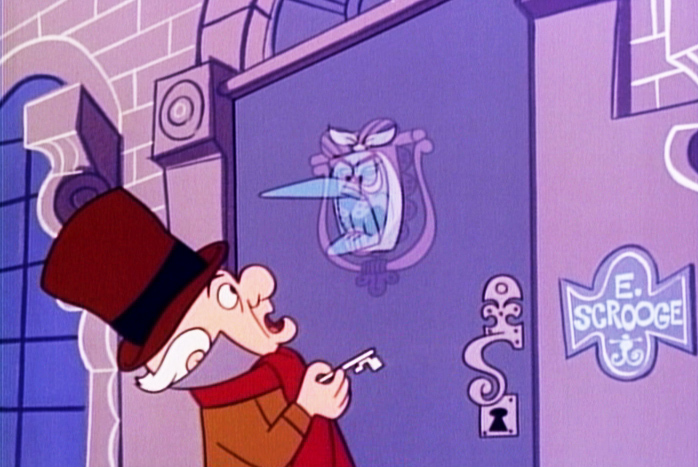
I thought I’d seen every feature film version of “A Christmas Carol.” I know the Reginald Owen, Alastair Sim, Michael Caine (Muppet), George C. Scott, Patrick Stewart, Bill Murray and Mr. Magoo versions. (It seems upon researching that I missed a recent Jim Carrey rendition.) They differ only slightly, but as I recall in one or two of those Scrooge’s climactic change of heart includes offering Bob Cratchit a partnership.

That is the appropriate role of a business owner. Using your company to give teaching and experience to people so that they can better themselves is the best present anyone could provide. It is one that lasts a lifetime.

Posted in Entrepreneurship, Leadership, Management | Tagged , , , , , | 2 Comments

2 Responses to Santa Boss: The Role of a Business Owner

  1. Clint Moar says:

    Thanks John…
    I’ve never owned a business that supported employees so this is an interesting topic…to be honest, I’ve never worked for a co. that paid a wage/salary that I really felt I’d deserved…the very few times that I did get a “bonus”, I felt it was just balancing out what I’d already worked for/supplied…
    You’re right, offering a “piece” of the business would mean much more.
    Clint.

  2. Cheryl S. says:

    I agree with Clint’s comment about how bonuses are perceived. If your bonus in a privately held business is setup on a profit-sharing basis after an owner-established flat amount, then that is what you have been diligently focused on the entire *prior* year, despite the owner controlling those numbers in the end. Bonus potential is discussed prior to the period for which you are working towards it, so I agree that they are very much a ‘balancing out’ of work provided that met or exceeded the documented criteria. Anything new after the labor year in question would be a simple breach, wouldn’t it?

Leave a Reply

Your email address will not be published. Required fields are marked *