I had a special session with my business coach yesterday. That’s unusual. Typically we meet just once a month to cover my goals and objectives, and see if I am on track.
This time we met for the specific purpose of helping me prepare for an upcoming presentation in Las Vegas. I’ve conducted the workshop (“The Seven Sins of an Entrepreneur”) before, but I wanted to make it more interactive, with a few exercises “thrown in.” I say that with perfect understanding that throwing such things into a presentation is a good way to fall flat on your face.
Andrea coached. That is, she didn’t ask what I wanted to add, or what my exercises would be. Instead, she asked what I wanted from the audience. What role I expected them to play in the workshop, and how I wanted them to behave. Within an hour I had sketched out the ideas for several exercises, and realized that I needed to trim a dozen slides from the deck.
That’s what a great coach can do. She didn’t tell me what I needed to accomplish. I had a general idea of that before we started. Using a kind of mental ju jitsu, she got me to see my situation from a different perspective, and to tie it together with an overarching purpose and theme.She added some of her own skills, suggesting a few techniques drawn from her experience. The result was a blend of the best use of my abilities, enhanced by hers.
In an hour I went from struggling with a task that worried me to being energized, and anxious to get started as soon as possible. The interactive exercises improve the presentation immensely, add to the learning, and will exponentially enhance the learning experience.
In an hour she turbocharged what was good information into something that can help change the perspective of scores of business owners, improving their businesses, their lives, and the lives of their employees and customers. That’s a pretty powerful hour.
I’m finalizing my speaker panel for our Fall seminar series. This season we are concentrating on marketing and sales. The recession is over, but no one can feel the “recovery.” If you are waiting for things to be busy again, you will be waiting a long time. It’s time to get out and make something happen.
Yesterday I attended a presentation sponsored by the San Antonio Business Journal on marketing with social media. The speaker was Thom Singer, who has authored 9 books on business networking. He told a story that was a terrific illustration of how powerful social media can be.
Like many of us in South Texas, Thom suffers from “cedar fever” in the winter. Last year he tried Zyrtec, with excellent results. Overjoyed with the alleviation of his symptoms, he tweeted about how terrific Zyrtec was.
Within 5 minutes he received an email from the manufacturer containing a coupon for a free supply of Zyrtec. Now that’s focused marketing. Thom was so impressed that he has mentioned it in every presentation (51 so far in 2010) since. Now I am spreading the word even further.
What hit home for me, however, was that this amazing response to a customer wasn’t something that could only be done by a giant pharmaceutical company. It wasn’t a million dollars of television advertising, or full page spreads in national magazines. It was a targeted response, costing pennies, that changed one raving fan into an evangelist.
And it is something that every small business could do, or at least approximate. Internet-based marketing is within the capabilities of any small business owner. It just requires some time and education to make it happen.
I blog, and contribute to business forums on the ‘net. I have Google Alerts that tell me when my name or business are mentioned in Cyberspace. I have over 650 real, live LinkedIn contacts, all of whom I know personally. I post regular updates to LI, and (sometimes) to my Facebook page.
I thought that I was pretty web savvy for a small business owner, but I’m realizing that I’m only scratching the surface.
Here is an article that was published in the newsletter of the United Sates Swim School Association last week. I slightly abbreviated it to avoid repeating a couple of things that preciously appeared in this blog.
“What makes a small business owner successful?” I’ve been asked that question in media interviews, and by hundreds of business owners seeking a magic formula for success.
When I first started seriously looking for the answer, I assumed it was a lot of different factors. Luck certainly plays a part. Natural skills, experience and education are all helpful. But the more I examined business ownership, the more I saw owners who possessed all of those things and failed; while others who seemed to have none of them succeeded.
Over the last 13 years I’ve spent almost 11,000 hours in face to face conversations with small business owners. That doesn’t include time running my business, working with employees, writing, speaking, presenting, planning or doing the hundred other things required to run a company. That is strictly time spent discussing challenges with people who sign their own paychecks.
How do you define success? I’ve fed my family. I live in a nice house and am putting my kids through college. I’d probably say that I’m fairly successful; at least if you define success to be a certain level of material comfort.
Most business owners have a more ambitious definition of success. That definition isn’t merely financial. In fact, the majority of owners I know have relatively modest monetary goals. They usually start out seeking security for themselves, their families and their employees. As time goes on, they become more concerned with their quality of life and with the success of their company, its position in the market, its reputation and its growth.
For our purposes, let’s define “success” as that point here you are no longer worried about whether you can make a comfortable living, and start defining your achievements in broader terms than just money. My analysis finally led me to the realization that getting to that level requires two, and only two, individual traits.
The first trait is creative drive. We tend to think of all things creative as related to the fine arts; but entrepreneurs create solutions, systems and structures. People who start a business create something from a vision or an idea, just like an artist. It begins with a something that only the entrepreneur can see, and he or she makes it into brick and mortar reality.
Starting your own business is more personal than almost any other endeavor. Every stick of furniture or piece of equipment is something that you picked out. You developed every policy or procedure. You probably sold the first customer, and many more after that. You hired and trained the employees. You wrote the advertising copy. You signed the loan at the bank. Compared to starting a business, building your own home is practically a spectator sport.
Almost every owner I know will admit to occasionally walking through their business after everyone else has gone home, just to enjoy what he or she has created.
Your business feeds your drive to create something. That’s why so many business owners are poor managers. After they’ve completed the creation process, they often lose interest in the mere “maintenance” of it. Many entrepreneurs continue to work tirelessly long after their financial security is assured. That isn’t because of greed. It’s their need to keep creating something new.
The second trait of a successful owner is a tenacious approach to problem solving. By tenacious I mean that business owners do not know how to stop solving a problem. If they figure out a solution, and it doesn’t work, they’ll figure out another, and then another. They refuse to admit defeat. They believe that every challenge has an answer; they just haven’t figured out what it is yet.
Setbacks are merely learning opportunities. You may not feel good about a temporary failure; but ask yourself this question. How much have you learned from your successes? When we do something right, we usually accept the result. It’s when something goes wrong that we try alternatives, and expand our experience.
A friend of mine sums it up pretty well. “Experience is what you get when you don’t get what you wanted.”
How many times have you been frustrated by an employee or a vendor who says “I tried to fix it, but it still doesn’t work?” So what? What will you try next? And what will you try if that doesn’t work? Business owners keep solving until the have an answer that works. In their opinion, stopping with an answer that doesn’t work is simply stupid.
You went into business for yourself because you had a desire to create something that was entirely yours. You stayed in business because you refused to accept failure as an option. If you think about it, that’s pretty much what separates the successful small business owner from the rest of the pack. Of course luck and talent help, but they really only affect the degree to which you are successful.
On the same subject, I found this great video on the blog of my friend Joe Zente. Joe is a sales training and assessement professional in Austin, TX. You can find him at www.zthree.com
I confess to being a fan of really, really good “B” movies. What is a good, bad movie? It’s one that knows it’s a bad movie, and lets the audience know that it knows. I haven’t seen it, but Piranha 3D notched the http://www.rottentomatoes.com/ review scale at 82%. That is like “Godfather” level ratings. That’s not because it’s a great film, but because it knows that it isn’t.
One of my favorites is “Buckaroo Banzai Across the Eighth Dimension.” Just imagine Christopher Lloyd, Peter Weller, Jeff Goldblum, John Lithgow and Ellen Barkin camping it up with corny lines and ridiculous scenes. No plot synopsis is necessary. That would miss the point.
In one scene Lithgow is leading cheers for a bunch of aliens (don’t ask.) He shouts from a raised platform:
“Where are we gonna go?” “Planet Ten!” They all scream. When are we gonna get there?” “Real soon!”
The funny thing is that he has been leading these aliens for three quarters of a century, and you just know that “Real soon!” has been the strategy from the beginning.
Many small business owners are using the Buckaroo Banzai strategy with their employees right now. When is this recession going to end? (Real soon.) When are we going to hire more people to help us? (Real soon.) When will we start getting raises again? (Real soon.)
I just read another article about the breadth and depth of the debt problem. If you read my last post, you know that it hasn’t nearly worked through the system yet. On my bad days I see doom and gloom, but even on my good days I can’t imagine returning to the loose money and Chinese-financed boom of the early 20-oughts. The numbers are just too draconian to be ignored. Our economy still has the bulk of the price yet to pay for the bubble, and stimulus money has just delayed the inevitable, not made it disappear.
Start now letting your employees know the truth. Their concept of real soon isn’t the same as yours. Consider practicing some limited open-book management, if you don’t already. Give them some metrics, the numbers you’d have to reach to begin hiring or expansion. If you’ve absorbed losses, tell them what has to be recovered before there will be earnings to spend again.
In the last quarter, more people left their jobs voluntarily than were terminated or laid off. Employees are moving because they have shorter time frames than owners, and no experience in riding out a prolonged downturn. They think that the problems or tightened belts are only in their companies, not in the ones down the street.
If you want to keep your best people on board both physically and mentally, it will take honest communication. Not doom and gloom speeches, but not “Real soon” either.
I’m sitting in Denver International Airport after yet another conference. Fortunately, it’s a whole 9 days until I have to come back here for another one.
In January of 2009 I wrote a blog on the strategic Triple Threat. The first threat was a severe recession. Second was a slow and painful recovery. Third was a changed economy where spending and consumption would settle at new, lower levels.
I attended a presentation by an economist from the Federal Reserve yesterday. His news was pretty solid evidence that we are still in phase two- the slow and painful recovery. His main points:
Corrective data are coming in on the 2.4% GDP growth announced 2 weeks ago for the second quarter, and they are massive. The Fed is now planning for a revised estimate of 1.1% . The markets buckled at the 2.4% (initial expectations were for 3.7%) I don’t see how their reaction could be good when this comes out in a few weeks.
No internal tracking indicators are positive. He said ” I repeat. The Fed does not have a single positive tracking indicator.”
Employment increases are rising slower than workforce population increases. There will be no drop in the number of unemployed people in the foreseeable future.
Savings (published at 3-4%) may actually be running at 6-8%, and much higher for those with disposable income. All of the increase may be in the top quintile of household incomes. The 2nd quintile is steady. The bottom 3 quintiles of population are sinking further into debt. This portends no further recovery in retail or consumption.
Bond yields may be reaching the end of a 30 year cycle. The last 2 years are actually above the long term trend line. We are re-entering a bond market like 1953-1982, when bonds were investments for widows and orphans. He said that bonds are the current bubble.
Only 50% of all banks are actually lending at all. Money for construction and development continues to shrink. Regular commercial real estate lending is steady. Commercial/Industrial lending is on life support. No small biz lending at all. (It appears that limited SBA guarantee funds may be going to formerly commercial-qualified deals, freezing out SBA traditional clients.)
Residential mortgage delinquencies not only aren’t slowing, but the rate of increase is accelerating. Commercial mortgages are no better, but lag 2 years behind the residential curve, so that bubble hasn’t really burst yet.
80% of TARP bailout money is still in banks. It will be a long, long time before they have to give up arbitrage in favor of actual business lending.
He was not concerned about deflation. The fact that Bernanke acknowledges it and has committed the FED to any inflationary tactic necessary to counter it renders it moot. He said that the Fed “has plenty of tools left.” The current tactic is to print money and lend it to the government to cover deficit spending. I’m not sure what could be more inflationary than that, but he seemed to think they could do more.
Another source who specializes in residential real estate foreclosures cautions us to remember that Fannie and Freddie, besides being broke, are sitting on 7.5 million foreclosed homes rather than dump them on the market just before the election. Look for residential property to take another hit after November.
I know that we are all sick of the recession, but that doesn’t mean a damn thing.What should you do? To paraphrase the words of Admiral Chester Nimitz after Pearl harbor: “Keep your powder dry. Watch for opportunity. Take action as soon as you see an opening.”
If you’ve made it this far, you are already running lean and mean. Competitors are falling. Better employees are available for job openings. Bargains are available. Cash is still king, and will remain so. Negotiate hard, and spend carefully. If you thrive on adversity, the best may be yet to come.
As a business owner, you know what it’s like to lie awake at 2 a.m. Maybe it has happened when you are excited and full of new ideas for your business. More often, it’s because you are worried about issues you will face the next day. Sometimes, it’s because you just woke up with the solution to a problem. I’ve experienced all those emotions about my businesses over the years. Awake at 2 o’clock? is where I share them with you, and hopefully help with answers that will let you sleep.
John F. Dini, CExP, CEPA
Small business owners are the Hunters of the 21st century. We are 3% of the US population, and yet we create over half of all American jobs. As Hunters, we may not be inclined to manage by the numbers or stick to systems. Are you a Hunter or a Farmer?
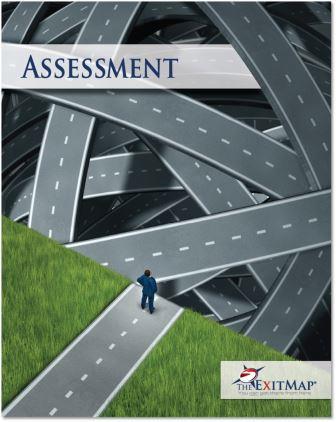
How prepared are you to exit your company? The Assessment breaks down the four major categories of exit readiness; Finance, Planning, Operations and Revenue/Profit.





Really great info, i like what i read.